

Vector artwork has a major advantage in professional printing: it can be enlarged or reduced without losing the clean structure that makes a design look sharp. That advantage becomes especially important when a logo, illustration, label, or promotional graphic must appear on different materials and at different sizes. 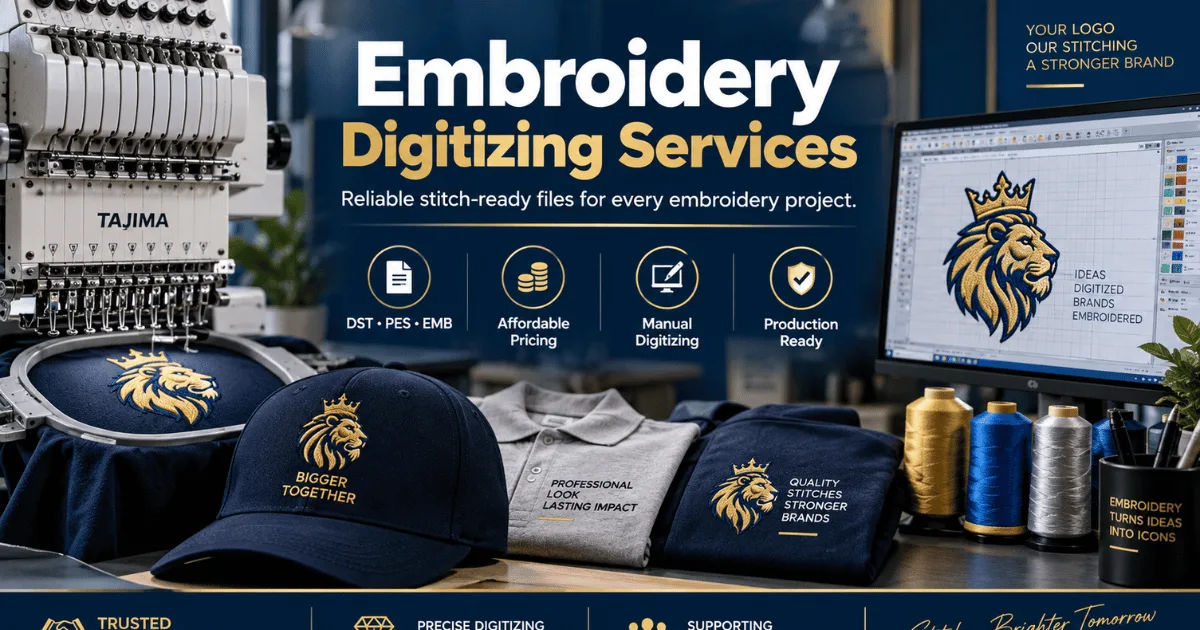
This is where vector conversion services can make a practical difference. They turn suitable raster artwork into vector artwork by rebuilding shapes, lines, curves, and colors so the design is based on editable paths rather than a fixed grid of pixels. The result is artwork that is much easier to prepare for professional printing.
The improvement is not simply about making an image “higher resolution.” Good vector artwork gives the printer cleaner information to reproduce. Instead of asking a printer to interpret a limited number of pixels, the artwork contains mathematically defined shapes that can be rendered at the required output size. That distinction can affect sharpness, consistency, color handling, and overall production quality.
Understanding Why Raster Images Can Hurt Print Quality
Raster images are made from pixels. Photographs are a familiar example because they contain thousands or millions of individual pixels arranged into a grid.
When a raster logo is created at a small size, it may look perfectly clear on a phone or monitor. The problem appears when the same file is enlarged. The software has to estimate what new pixels should look like between existing pixels. This process, called interpolation, can soften edges and make small details appear less precise.
A low-resolution JPG can also contain compression artifacts. These may appear as fuzzy edges, blocky areas, or slight color changes around text and shapes. Those defects can become more noticeable on printed materials.
For simple graphics such as logos, icons, badges, and line illustrations, this limitation is unnecessary. These designs are usually built from geometric shapes and defined colors, which makes them strong candidates for vector reconstruction.
This is one of the main reasons businesses turn to vector conversion services when their existing logo or artwork is only available as a low-resolution JPG or PNG.
What Makes Vector Artwork Different?
Vector graphics use paths rather than a fixed pixel grid. A path can describe a straight line, curve, circle, or complex outline using mathematical points and handles.
Because the shapes are defined independently of resolution, the same artwork can be used on a business card, poster, banner, product package, or large sign without becoming pixelated.
This scalability is one of the main reasons vector conversion services are valuable for print-focused businesses. A properly reconstructed logo can be resized for different production requirements while retaining smooth outlines and clean proportions.
Vector files can also contain editable elements. A designer can adjust a curve, change a color, modify a shape, or separate objects when the file has been built correctly.
How Vector Conversion Improves Sharpness
The most obvious benefit is edge quality.
Printed logos often contain curves, diagonal lines, small lettering, and geometric shapes. Raster versions may show rough or soft edges when enlarged. Vector artwork allows the printing system to render those outlines at the required output resolution.
Consider a circular logo. In a small raster image, the circle is represented by pixels. When enlarged, the edge can become stair-stepped or blurry. A vector version describes the circle as a curve, allowing it to remain smooth at different sizes.
This matters especially for large-format printing. A design that is printed on a small card may look fine even when it is raster-based. The same design placed on a wall graphic or outdoor sign can expose every weakness in the original file.
By using vector conversion services, businesses can replace a pixel-dependent design with cleaner paths that are much more suitable for scaling.
Better Results Across Different Print Sizes
Businesses rarely use a logo at only one size. A single design may appear on stationery, packaging, uniforms, vehicle graphics, posters, signs, and promotional products.
Using separate low-resolution raster files for every size can create unnecessary problems. One file may be too small for a banner, while another may have been compressed too heavily.
A clean vector master file provides a more flexible starting point. Vector conversion services can help create that master artwork from an existing raster logo or illustration, provided the source contains enough information to recreate the design accurately.
Once converted, the artwork can be scaled to the dimensions required by the print provider without the typical pixelation associated with enlarging a small bitmap.
This makes vector conversion especially useful for businesses that repeatedly order printed materials in different sizes.
Cleaner Text and Fine Details
Text is another area where vector artwork can provide a noticeable advantage.
Small text needs clean outlines to remain readable. When raster text is enlarged or reproduced from a poor-quality source, letter edges can become soft. Thin strokes may also disappear or look uneven.
Vector text and vector outlines preserve the shape of characters more reliably. This is useful for logos, labels, packaging, signage, and promotional designs where readability matters.
However, there is an important distinction. If the original font is unavailable, a professional may need to recreate the lettering as vector shapes rather than simply converting the text automatically. This can take careful manual work when the lettering is custom or stylized.
Experienced vector conversion services can identify these situations and determine whether lettering should be traced, redrawn, or recreated using an appropriate typeface.
More Accurate Curves and Shapes
Not every conversion is equally good. Simply running an image through an automatic tracing filter does not guarantee professional print quality.
Automatic tracing can create hundreds or thousands of unnecessary anchor points. It may also produce uneven curves, distorted corners, or small gaps that were not present in the original artwork.
Good vector conversion services focus on rebuilding important shapes rather than blindly tracing every pixel. The goal is a clean, efficient vector structure that represents the intended design.
A skilled technician may redraw circles, smooth curves, simplify outlines, and correct proportions manually. That extra work often produces a much cleaner file than an automatic conversion.
The difference becomes especially visible when artwork is enlarged for professional printing.
Improved Color Control
Print quality is not only about sharpness. Color matters just as much.
Raster images can contain colors that are difficult to reproduce consistently in print, especially when they were created for screens. RGB artwork may need to be converted or adjusted for a CMYK printing workflow.
Vector artwork gives designers more control over individual color elements. A logo can be separated into distinct fills, strokes, and objects, making it easier to identify and adjust colors before production.
This does not mean every vector file automatically has perfect print colors. Color profiles, ink systems, paper, and printing equipment still matter. However, editable vector elements can make the preparation process much easier.
Professional vector conversion services can also organize colors more logically, making future editing and print preparation simpler.
Easier Editing Before Printing
One of the hidden benefits of vector artwork is editability.
Imagine a company changes its brand color shortly before printing a large order. Editing a clean vector logo can be relatively straightforward. The designer can select the relevant object and change its fill or stroke.
With a flattened raster image, the same adjustment may require extensive editing or rebuilding.
Vector conversion services can therefore improve the overall print workflow, not just the appearance of the final piece. A properly organized file gives designers more control before the artwork reaches production.
This flexibility can be valuable when the same artwork is used for different campaigns, products, packaging designs, or promotional materials.
Better Preparation for Professional Printing
Professional printers often request specific file formats and production specifications. Common vector formats include AI, EPS, SVG, and PDF, although the preferred format depends on the printer and project.
A vector conversion project can provide artwork that is easier to place into layouts, separate into colors, and prepare for different output methods.
For example, a packaging designer may need to use the same logo in several locations. A clean vector file makes it easier to resize and position the logo without worrying about resolution limitations.
Printers may also need outlines, bleed, color settings, or other production adjustments. Vector artwork provides a strong foundation for those tasks.
For businesses that regularly send files to different printers, vector conversion services can help create a reliable master file that is easier to reuse.
Why Resolution Independence Matters
Resolution independence is one of the clearest technical reasons vector graphics improve print quality.
A raster file has a defined pixel dimension. If a logo is 500 pixels wide, there is a practical limit to how large it can be printed before quality begins to suffer.
A vector file does not have the same fixed pixel limitation. The output device calculates the paths at the required resolution.
That means a single vector logo can be rendered for a 2-inch label or a 20-foot display while maintaining smooth edges. Vector conversion services make this possible when they successfully reconstruct a suitable raster source into genuine vector paths.
This is particularly useful for companies that need one logo across both small promotional items and large physical signage.
Better Consistency Between Print Jobs
Brand consistency is important for businesses. A logo should look like the same logo whether it appears on a letterhead, product box, sign, or promotional item.
Using different raster files can introduce subtle differences in size, sharpness, color, and proportions. A clean vector master reduces that risk.
Design teams can work from the same source and produce different versions for different applications. This creates a more consistent visual identity.
For companies that regularly print marketing materials, that consistency can save time and reduce the need to repair artwork before every job.
Reliable vector conversion services can be especially useful when an older brand has accumulated many different versions of the same logo.
Vector Conversion Is Especially Useful for Logos
Logos are among the best candidates for conversion because they are usually made from simple shapes, typography, and solid colors.
A company may only have a JPG or PNG of an old logo. If the original design file has disappeared, recreating the logo as vector artwork can restore flexibility.
The quality of the conversion depends heavily on the source. A clear, high-resolution image with visible edges is much easier to recreate than a tiny, heavily compressed screenshot.
When the source is poor, a professional may need to redraw portions of the design instead of relying entirely on automated tracing.
For these projects, vector conversion services can save significant design time because the provider handles the technical reconstruction while preserving the visual identity of the original logo.
How the Conversion Process Usually Works
A professional conversion generally starts by examining the source image.
The technician identifies shapes, colors, lettering, outlines, and important design details. They then determine which elements can be traced automatically and which should be rebuilt manually.
The artwork is recreated using vector paths. Curves are adjusted, unnecessary points are removed, and shapes are aligned.
Colors are then assigned to the appropriate objects. Depending on the intended use, the file may be prepared in RGB, CMYK, or another suitable color setup.
Finally, the artwork is inspected at different sizes. This step is important because a file can look good at one scale while revealing poor construction when enlarged.
A careful workflow is what separates professional vector conversion services from a simple one-click image tracing process.
Automatic Tracing vs. Professional Conversion
Automatic tracing tools can be useful for simple artwork. They are fast and can produce a starting point.
However, automated results often contain excessive anchor points and awkward shapes. Complex logos, tiny details, gradients, shadows, and unusual lettering can be especially difficult.
Professional vector conversion services add human judgment to the process. Instead of accepting whatever the tracing software produces, a skilled operator can clean the paths and rebuild difficult sections.
That does not mean manual conversion is always necessary. For a very simple icon, automated tracing followed by cleanup may be enough. The right approach depends on the artwork and its intended use.
For professional printing, the goal should always be a clean and usable vector file rather than simply receiving an EPS or AI extension.
Does Vector Conversion Fix Every Print Problem?
No. This is an important point.
Vector conversion can solve problems caused by pixelation and poor scalability, but it cannot automatically fix every production issue.
A badly designed logo may still have poor proportions after conversion. Incorrect colors can still print incorrectly. A low-quality photograph cannot become a naturally detailed photograph simply because it is placed inside a vector file.
Likewise, some raster effects such as realistic textures, photographs, and complex shadows are better kept as raster elements.
The goal is to use the right format for the right type of artwork.
This is why good vector conversion services begin by evaluating the artwork rather than promising that every image can be converted into a perfect vector with one automated click.
When You Should Consider Vector Conversion
You should consider conversion when you have a logo or graphic that needs to be printed at several sizes, especially when the existing file becomes blurry when enlarged.
It is also useful when a printer requests an AI, EPS, SVG, or vector PDF file and you only have a JPG or PNG.
Other good situations include rebranding projects, packaging redesigns, large-format signage, embroidery preparation, screen printing, promotional products, and long-term brand asset management.
If a design will be reused for years, creating a clean master vector file can be a worthwhile investment.
For these situations, vector conversion services offer a practical way to turn an existing design into a more flexible production asset.
Choosing Quality Over Simple Conversion
Not every provider delivers the same level of work. When evaluating vector conversion services, look beyond the promise of a fast file delivery.
Ask whether the artwork is manually cleaned after tracing. Check whether the provider can handle custom lettering and complex shapes. It is also useful to ask which formats are supplied and whether the final file will be editable.
A good provider should understand that vectorization is not simply a file extension change. Changing a JPG into an EPS container does not make the underlying artwork genuinely vector-based.
The paths themselves need to be properly created and organized.
It is also worth checking whether revisions are included. If a curve, color, or letter shape does not match the original, you should have an opportunity to request corrections before the artwork goes into production.
The Role of Vector Artwork in Large-Format Printing
Large-format printing is one of the clearest examples of why vector artwork matters.
A small logo that looks acceptable on a computer screen may become visibly blurry when printed several feet wide. This happens because the original raster file does not contain enough pixel information for the larger output.
Vector artwork avoids that specific limitation because the shapes can be rendered at the output device's required resolution.
Signs, banners, vehicle graphics, wall displays, trade show graphics, and storefront lettering can all benefit from properly constructed vector artwork.
In these applications, vector conversion services can be particularly valuable because print defects that seem minor on a small label can become extremely obvious on a large physical surface.
Why Clean File Construction Matters
Print quality is affected not only by whether artwork is technically vector, but also by how that vector file has been constructed.
Too many anchor points can make curves uneven. Overlapping shapes can create unexpected printing problems. Hidden objects may complicate editing. Incorrectly closed paths can produce gaps or unexpected fills.
A professional file should be reasonably organized and efficient.
This is another reason to choose experienced vector conversion services rather than focusing only on the cheapest conversion price.
A clean file is easier to edit, easier to scale, and easier for another designer or printer to understand later.
Long-Term Benefits for Businesses
A properly converted vector logo can become a valuable long-term brand asset.
Instead of repeatedly searching for the largest available JPG, a business can maintain a master vector file and export the appropriate version whenever needed.
The same artwork can support websites, packaging, signage, promotional products, advertising materials, uniforms, and printed stationery.
This can reduce repeated design work and make communication with printers easier.
Over time, the practical value of vector conversion services may therefore extend beyond one print job. The converted file can become part of a company's permanent design library.
Turning artwork into embroidery does not have to be complicated, and PSA Digitizing is here to make the process easier. We specialize in converting logos, artwork, and custom designs into clean embroidery files that are ready to stitch. Our services support popular formats including DST, PES, JEF, and many others. Based in Clarkston, Georgia, USA, PSA Digitizing combines experienced craftsmanship with modern digitizing software to create smooth and accurate embroidery designs.
Customers appreciate our attention to detail, reasonable pricing, and reliable turnaround, reflected in our strong 4.5+ star Trustpilot rating. From small hobby projects to business logos and custom patches, every order receives careful attention. If you have artwork that needs to be prepared for embroidery, visit psadigitizing.com and let PSA Digitizing handle the digitizing for you.
Conclusion
High-quality print production depends on giving the printer artwork that contains clear, usable information. Raster images can work extremely well when they are large enough and properly prepared, but they have natural limitations when simple graphics need to be enlarged repeatedly.
Vector artwork addresses many of those limitations by defining designs through paths, curves, and shapes instead of a fixed pixel grid. This allows logos and illustrations to remain sharp across a wide range of print sizes.
That is why vector conversion services can be so useful. They can turn an existing raster logo or graphic into a scalable, editable asset that is easier to resize, adjust, color-separate, and prepare for production. When the conversion includes careful manual cleanup, the result can be substantially better than a basic automatic trace.
The biggest advantage is flexibility. A properly converted logo can move from a business card to a poster, package, banner, or sign without the same loss of clarity that can occur when a small raster file is repeatedly enlarged.
Still, conversion should be approached realistically. It cannot magically add photographic detail or correct every design and printing problem. The quality of the source, the complexity of the artwork, the skill of the person doing the conversion, and the final printing process all affect the result.
For businesses that depend on consistent branding, investing in clean vector artwork is often a practical long-term decision. Instead of maintaining multiple blurry files for different print sizes, you can maintain one strong master asset and create the versions you need from it.
When the artwork is carefully rebuilt, vector conversion services do more than change a file format. They improve the foundation on which the print job is built, giving designers and printers cleaner edges, better scalability, easier editing, and more reliable production results.