

Starting a career in the beauty industry can be an exciting opportunity, especially for people who enjoy creativity, skincare, makeup, and personal grooming. However, beginners often wonder whether they need previous experience before entering this field. The good news is that many professional beauty training programs are designed to welcome students with little or no knowledge of cosmetology. 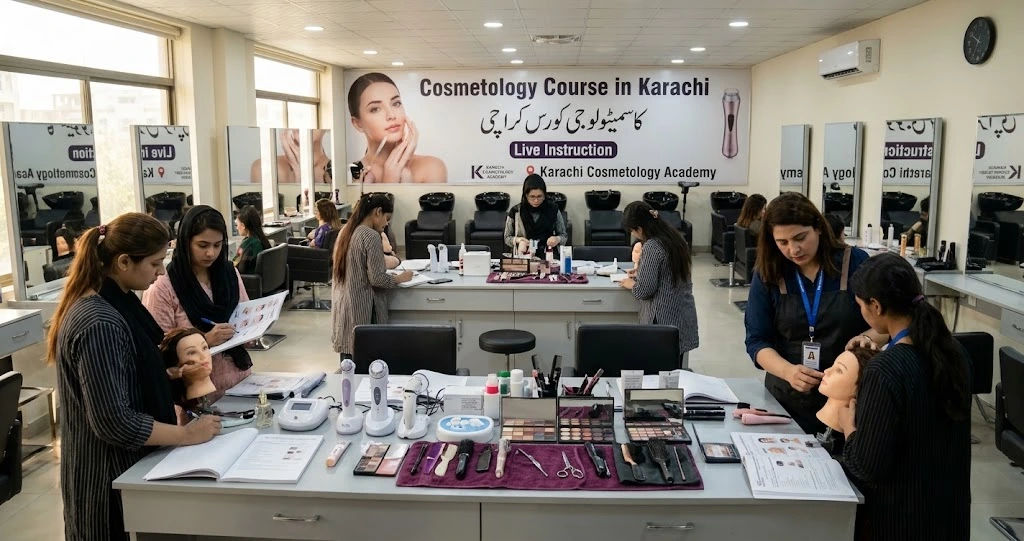 A cosmetology course in Karachi can be an excellent starting point for individuals who want to develop professional beauty skills and explore different career opportunities. These courses generally introduce students to essential beauty techniques, skincare knowledge, hair treatments, makeup application, and personal grooming. With proper training and regular practice, beginners can gradually develop the confidence needed to work in the beauty industry.
Karachi offers opportunities for people interested in learning professional beauty services. From beauty salons and skincare clinics to makeup studios and independent businesses, the industry provides several possible career paths. However, choosing the right training institute and understanding the course structure are important steps before enrolling.
This comprehensive guide explains why cosmetology can be suitable for beginners, what students learn, how practical training works, and what opportunities may become available after completing a professional course.
Cosmetology as a Beginner
Cosmetology is the professional study of beauty treatments and personal grooming. It covers different areas of beauty care, including skincare, haircare, makeup, nail care, and other cosmetic services.
People working in this industry help clients improve their appearance while maintaining appropriate hygiene and professional standards.
For beginners, cosmetology provides an opportunity to learn several beauty-related skills through structured lessons and practical activities.
Students do not necessarily need previous experience. Most beginner-friendly programs introduce basic concepts before moving toward more advanced techniques.
What Does a Cosmetologist Do?
A cosmetologist may perform different beauty services depending on their education, training, qualifications, and professional scope.
Common responsibilities include:
-
Providing basic skincare treatments.
-
Applying makeup for different occasions.
-
Understanding haircare and styling techniques.
-
Performing basic nail care services.
-
Advising clients about suitable beauty products.
-
Maintaining cleanliness and hygiene.
-
Understanding different skin and hair types.
-
Providing professional customer service.
Some cosmetologists specialize in one particular area, while others develop broader knowledge of beauty services.
Is Previous Experience Necessary?
No, previous experience is generally not necessary for beginner-level cosmetology training.
A well-structured course starts with basic information and gradually introduces students to professional techniques.
For example, someone who has never performed a facial treatment can first learn about skin types, cleansing products, hygiene, and facial preparation.
After understanding these fundamentals, the student can begin practicing basic treatments under supervision.
This learning process makes cosmetology accessible to people from different educational and professional backgrounds.
Why Is a Cosmetology Course in Karachi Suitable for Beginners?
Karachi is a major commercial city with a developed beauty and personal care industry. Many people regularly visit salons, makeup studios, and skincare centers for professional services.
This creates opportunities for individuals who want to learn beauty-related skills.
A cosmetology course in Karachi can help beginners understand the professional standards expected in this industry while developing practical abilities.
There are several reasons why this type of training may be suitable for new learners.
Beginner-Friendly Learning Environment
Many cosmetology programs are organized according to different skill levels.
Students usually begin with introductory lessons before moving toward advanced beauty procedures.
This approach prevents beginners from feeling overwhelmed by complicated techniques.
Teachers may explain each procedure step by step and demonstrate how professional equipment and products should be used.
Students can then practice the same techniques to improve their understanding.
Development of Practical Skills
Cosmetology is a practical profession. Reading about beauty treatments is helpful, but students also need hands-on experience.
Training programs may provide opportunities to practice different procedures using appropriate tools and products.
For example, students might practice facial cleansing, basic makeup application, hair styling, and nail care.
Repeated practice helps improve accuracy, confidence, and professional performance.
Opportunities to Explore Different Beauty Fields
Beginners may not know which beauty specialization suits them best.
Cosmetology training can introduce them to several areas of the industry.
After exploring these subjects, students can identify their interests and decide whether they want to specialize in skincare, makeup, haircare, or another beauty service.
What Do Beginners Learn During a Cosmetology Course?
The subjects included in a program depend on the institute, course duration, and qualification level.
However, comprehensive training programs generally introduce students to several important beauty concepts.
Understanding these subjects can help beginners prepare for their future careers.
Basic Skincare Knowledge
Skincare is an important part of cosmetology education.
Students learn about different skin types and common skincare requirements.
They may study:
-
Normal, dry, oily, and combination skin.
-
Basic skin cleansing methods.
-
Moisturizing techniques.
-
Exfoliation principles.
-
Sunscreen and sun protection.
-
Common skincare ingredients.
-
Facial preparation and aftercare.
Students also learn why different skin types require different products and treatment approaches.
This knowledge helps them understand how to select suitable skincare products for clients.
Professional Makeup Techniques
Makeup is another popular subject in cosmetology training.
Beginners can learn how to prepare the skin before applying makeup and how to use different cosmetic products correctly.
Common topics include:
-
Foundation selection and application.
-
Concealer techniques.
-
Face contouring.
-
Blending methods.
-
Eye makeup.
-
Eyebrow shaping and filling.
-
Lip makeup.
-
Basic party makeup.
-
Makeup removal.
Students may also learn how lighting, skin tone, and facial features influence makeup choices.
With regular practice, they can gradually improve their ability to create balanced and professional-looking makeup styles.
Haircare and Styling Fundamentals
Haircare is another area that may be included in a comprehensive program.
Students can learn about hair types, scalp conditions, basic hair treatments, and styling techniques.
Some common learning areas include:
-
Hair washing and conditioning.
-
Hair sectioning.
-
Blow-drying methods.
-
Basic hairstyling.
-
Hair preparation.
-
Understanding hair products.
-
Basic hair health and maintenance.
Advanced chemical treatments and specialized procedures may require additional education and supervised training.
Nail Care and Personal Grooming
Many beginner programs introduce students to basic nail care.
This may include nail cleaning, shaping, filing, cuticle awareness, and basic nail polish application.
Students also learn about maintaining clean tools and preventing contamination.
Personal grooming education helps students understand how professional appearance and cleanliness contribute to the overall customer experience.
How Does Practical Training Help Beginners?
Practical training is one of the most important parts of professional beauty education.
A student may understand the theory behind a facial or makeup application but still need considerable practice to perform it correctly.
A good cosmetology course in Karachi should provide a suitable balance between theoretical lessons and supervised practical activities.
Learning Through Demonstrations
Teachers often demonstrate procedures before asking students to perform them.
For example, an instructor may explain the correct order of facial cleansing, demonstrate product application, and discuss basic precautions.
Students can observe the technique and ask questions before attempting the procedure themselves.
This method makes complicated tasks easier to understand.
Practicing Under Supervision
Beginners can make mistakes while learning new skills.
Supervised practice allows instructors to identify problems and explain how to correct them.
A student might initially struggle with foundation blending or hair sectioning.
With constructive feedback and repeated practice, these techniques can become easier.
Building Confidence Gradually
Confidence develops through experience.
When students repeatedly practice different beauty services, they become more comfortable handling tools, selecting products, and communicating with clients.
They also learn how to manage their time and organize their work.
These abilities are important for anyone planning to enter a professional salon or establish an independent beauty business.
Do Beginners Need Special Educational Qualifications?
Most introductory cosmetology programs do not require students to have an advanced academic background.
However, admission requirements vary between training institutes.
Some institutes may require basic school education, while others may accept students based on age requirements and general eligibility criteria.
Before enrolling, beginners should check the admission policy of their preferred institution.
Basic Skills That Can Be Helpful
Although previous beauty experience is not essential, certain personal qualities can make learning easier.
These include:
-
Interest in beauty and personal care.
-
Creativity and attention to detail.
-
Patience while learning new techniques.
-
Good communication skills.
-
Willingness to practice regularly.
-
Ability to follow hygiene instructions.
Students do not need to possess all these qualities before starting.
Many of them can develop naturally during the training process.
How Long Does a Beginner Cosmetology Course Take?
Course duration depends on the institute and the subjects included in the program.
Some introductory courses focus on basic beauty skills and may take a few weeks or months.
More comprehensive programs covering multiple cosmetology specializations may require several months or longer.
Students should avoid selecting a program based only on its advertised duration.
A shorter course is not necessarily better if it does not provide sufficient practical training.
Factors That Affect Course Duration
Several factors influence how long students need to complete their education.
Course content: Programs covering skincare, makeup, haircare, and nail services may require more time.
Practical sessions: Students need sufficient opportunities to practice different procedures.
Class schedules: Weekend, evening, and full-time classes may have different completion periods.
Learning speed: Some students develop practical skills faster than others.
Advanced specialization: Additional training in specific beauty services can extend the learning period.
Before admission, ask the institute for a complete timetable and details about practical sessions.
How to Choose the Right Cosmetology Institute in Karachi
Selecting a suitable training institute is an important decision for beginners.
The quality of education can influence how effectively students develop their skills.
Instead of choosing a school simply because it offers a low fee or attractive advertisements, compare its teaching methods, facilities, and course structure.
Check the Course Curriculum
Start by reviewing the subjects included in the program.
A comprehensive beginner curriculum should cover essential beauty concepts and provide opportunities to develop practical abilities.
Check whether the institute teaches skincare, makeup, haircare, hygiene, and other relevant subjects.
You should also confirm whether practical sessions are included in the advertised course fee.
Evaluate Instructor Experience
Experienced instructors can help beginners understand professional techniques more effectively.
Ask about the teachers' qualifications, practical experience, and teaching methods.
It is also helpful to understand how instructors support students who are learning beauty procedures for the first time.
Inspect Training Facilities
Professional training requires suitable equipment and a clean learning environment.
If possible, visit the institute before registering.
Look for properly maintained beauty tools, appropriate workstations, hygiene facilities, and relevant training products.
The learning environment should support both classroom instruction and practical activities.
Ask About Certification
A certificate can provide evidence that you have completed a particular training program.
However, not all certificates have the same recognition or value.
Ask whether the qualification is issued by the institute itself or an officially recognized awarding organization.
Also, confirm what skills and course requirements must be completed before receiving the certificate.
Compare Course Fees
Training costs can vary depending on course length, facilities, instructors, and included materials.
Some institutes include products and equipment in their fees, while others require students to purchase them separately.
Ask for a clear breakdown of all expenses before enrolling.
This helps prevent unexpected costs later.
Common Challenges Beginners May Face
Although cosmetology can be an enjoyable career, beginners should understand that learning professional beauty skills requires patience and commitment.
Some challenges are normal during the early stages of training.
Difficulty Learning New Techniques
Students may initially struggle with makeup blending, facial techniques, or hair styling.
These activities require coordination and attention to detail.
The best approach is to practice regularly instead of expecting immediate perfection.
Different Skin Types
Every client has different skincare requirements.
Beginners may find it difficult to understand which products are appropriate for different skin types.
Studying basic skin science and following professional guidance can improve their knowledge.
Students should also learn to recognize when a skin concern requires referral to a qualified healthcare professional rather than a cosmetic treatment.
Managing Different Clients
Professional beauty services involve working with people who have different preferences and expectations.
Some clients may want simple makeup, while others may request more detailed looks.
Students need to develop listening skills and learn how to communicate clearly.
Good customer service is just as important as technical ability.
Maintaining Professional Hygiene
Cleanliness is essential in cosmetology.
Students must learn how to sanitize reusable tools, use disposable materials appropriately, wash their hands, and maintain clean workstations.
Poor hygiene can create unnecessary risks for clients.
Therefore, hygiene should become a regular part of professional practice.
Career Opportunities After Completing Cosmetology Training
One of the main reasons beginners choose beauty education is the possibility of developing a professional career.
After completing suitable training and gaining enough practical experience, students may explore different employment and business opportunities.
A cosmetology course in Karachi can provide foundational knowledge that helps learners understand the beauty industry and identify suitable career directions.
However, employment opportunities depend on individual skills, experience, qualifications, and employer requirements.
Working in Beauty Salons
Beauty salons offer opportunities for trained individuals to provide different personal care services.
Depending on their qualifications, graduates may work as junior beauty professionals, makeup assistants, or skincare assistants.
Starting in an entry-level position can help beginners gain practical experience.
Becoming a Professional Makeup Artist
Students interested in makeup may choose to develop this skill further.
They can explore bridal makeup, party makeup, event makeup, and professional photoshoot preparation.
Building a strong portfolio is helpful when attracting potential clients.
Starting an Independent Beauty Business
Some graduates eventually decide to offer beauty services independently.
They may establish a small beauty studio or provide selected services through appointment-based arrangements.
However, starting a business requires more than technical skills.
Individuals should also understand budgeting, customer management, product costs, marketing, and applicable business requirements.
Specializing in Skincare
Students who enjoy skincare may pursue additional training in suitable cosmetic treatments.
They can explore professional skincare products, facial care techniques, and client consultation skills.
Procedures involving medical diagnosis, prescription treatments, or invasive techniques require appropriate professional qualifications and authorization.
Tips for Beginners to Become Successful in Cosmetology
Completing a course is an important achievement, but professional development continues after graduation.
Beginners should develop consistent learning habits to improve their abilities.
Practice Every Day
Regular practice helps students become familiar with beauty tools and techniques.
Try to repeat the procedures learned during class and identify areas that need improvement.
Even short practice sessions can make a difference over time.
Build a Professional Portfolio
A portfolio allows students to demonstrate their abilities.
They can include photographs of makeup applications, hairstyling results, and other suitable beauty work.
Always obtain permission before photographing or publishing a client's images.
A well-organized portfolio can help when applying for salon positions or attracting independent customers.
Stay Updated With Beauty Trends
The beauty industry changes regularly.
New makeup styles, skincare ingredients, and hair trends become popular over time.
Following reliable professional resources, attending workshops, and participating in additional training can help graduates remain informed.
However, beginners should understand the safety and suitability of a technique before attempting it on clients.
Improve Communication Skills
Professional beauty workers interact with clients throughout the day.
They need to understand customer preferences, explain services, and provide clear aftercare information.
Polite communication and professional behavior can help build long-term customer relationships.
Learn Basic Business Skills
People interested in independent work should understand basic business management.
Learning how to calculate service prices, manage appointments, maintain supplies, and promote services can support future business development.
Is Cosmetology a Good Career Choice for Everyone?
Cosmetology can be a rewarding field, but it may not suit every individual.
People who enjoy creative activities, personal grooming, beauty products, and working with clients may find this profession interesting.
However, the industry also requires patience, discipline, and consistent practical effort.
Professionals may need to work flexible hours, manage demanding schedules, and meet different customer expectations.
Before enrolling, consider your interests and long-term career goals.
If you enjoy learning practical skills and helping people feel confident about their appearance, cosmetology may be worth exploring.
It is also important to understand that completing a course does not automatically guarantee employment or business success.
Professional growth depends on the quality of training, practical experience, customer service, and continued education.
Questions Beginners Should Ask Before Enrolling
Asking the right questions can help students make informed decisions.
Before selecting an institute, consider asking:
1. Is the course suitable for complete beginners?
Confirm that the curriculum starts with basic concepts and does not assume previous professional experience.
2. Are practical sessions included?
Find out how much time students spend practicing beauty techniques.
3. Are products and tools provided?
Some institutions provide training materials, while others require students to purchase their own supplies.
4. Who teaches the course?
Ask about instructor qualifications and professional experience.
5. What certificate will students receive?
Understand whether the certificate is internally issued or recognized by an external awarding body.
6. Is career guidance available?
Some institutes may offer portfolio guidance, internship opportunities, or employment support.
7. Can students visit the institute before admission?
Visiting the campus can help you evaluate its facilities and learning environment.
These questions can make the enrollment process easier and reduce the chances of selecting an unsuitable program.
Conclusion
A cosmetology career can be an excellent opportunity for beginners who want to enter the beauty and personal care industry. Previous professional experience is generally not required for introductory training because many programs start with fundamental concepts and gradually introduce more advanced techniques.
A cosmetology course in Karachi can help new learners develop essential knowledge of skincare, makeup, haircare, nail care, hygiene, and professional customer service. Through classroom lessons, instructor demonstrations, and supervised practical sessions, students can gradually improve their abilities and become more confident.
However, choosing the right institute is essential. Beginners should carefully evaluate the course curriculum, instructor experience, practical facilities, certification, duration, and total fees before making a decision. A program that provides sufficient hands-on experience and teaches professional hygiene standards can offer a stronger foundation than one focused mainly on theory.
After completing their training, students may explore opportunities in beauty salons, makeup studios, skincare services, and independent beauty businesses. Some may also decide to specialize in particular areas by pursuing additional education and practical experience.
Most importantly, beginners should remember that becoming a skilled beauty professional takes time. Regular practice, creativity, patience, communication skills, and a willingness to learn are important for long-term progress.
Overall, cosmetology can be a suitable starting point for people who are passionate about beauty and personal care. With proper training, realistic expectations, and consistent effort, beginners can build valuable skills and work toward developing a rewarding career in the beauty industry.