

Custom barber aprons are usually made from durable fabrics chosen to handle hair, water, styling products, sharp tools, and the daily movement of a busy barber. Unlike ordinary fashion aprons, barber aprons need to balance protection, comfort, durability, and practical storage. The material can affect how the apron feels during a long shift, how easily it can be cleaned, and how well it protects clothing.
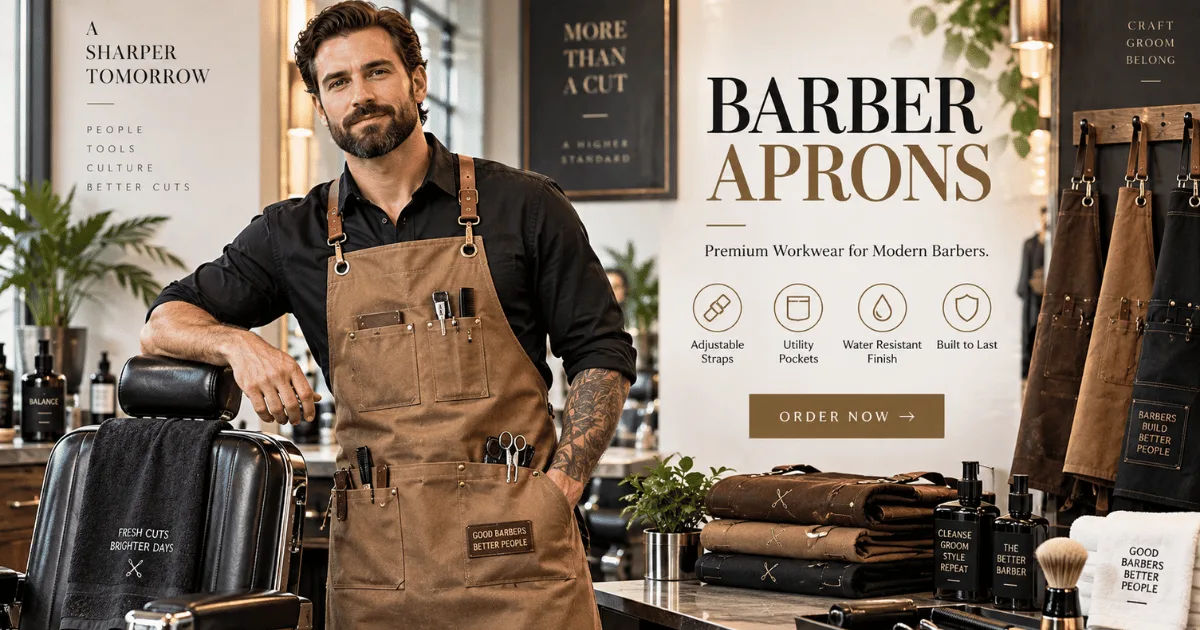
The most common materials include canvas, denim, leather, waxed canvas, polyester blends, and cotton. Each has different strengths. Some are lightweight and breathable, while others are built for maximum durability and develop a distinctive appearance over time.
Understanding these materials makes it easier to choose an apron that matches the working environment, personal preferences, and level of daily use.
Why Does the Material Matter?
A barber apron is exposed to more wear than many people realize. During a normal day, it may come into contact with loose hair, water, shaving products, hair color, pomades, oils, and disinfecting solutions.
The barber also moves constantly. Reaching for clippers, bending toward a client, wiping a station, or grabbing tools from a pocket puts repeated stress on the fabric and stitching.
For this reason, material selection is not simply about appearance. A good fabric should provide enough strength without becoming uncomfortable.
The ideal material also depends on the barber's work. Someone working mainly with dry haircuts may prefer a lightweight cotton or canvas apron. A barber who frequently uses wet products or chemical treatments may prefer something more resistant to moisture and stains.
Canvas
Canvas is one of the most popular materials used for barber aprons. It is a tightly woven fabric that can provide an excellent combination of strength, structure, and comfort.
Traditional canvas is commonly made from cotton. Some modern versions may include synthetic fibers to improve durability or reduce weight.
Why Barbers Like Canvas
Canvas is strong enough for daily professional use while remaining more flexible than heavy leather. It also provides a firm surface for pockets, straps, and other functional features.
Another advantage is its ability to develop character with use. A canvas apron may become softer and more comfortable after repeated wear while still retaining its practical appearance.
Canvas is also relatively easy to customize. Logos, names, embroidery, patches, and other branding elements can be added depending on the fabric and production method.
Heavyweight vs Lightweight Canvas
Not all canvas has the same weight.
Heavyweight canvas offers excellent durability and is suitable for barbers who want a rugged apron. However, it can feel warmer and heavier during long working hours.
Lightweight canvas is easier to wear for extended periods. It may be preferable in warm environments, especially when the barber spends many hours standing and moving.
The best choice depends on the balance between durability and comfort.
Denim
Denim is another practical material for custom barber aprons. Most people associate denim with jeans, but the same basic woven structure can work well in professional aprons.
Denim is durable, familiar, and relatively easy to maintain. It can also give an apron a casual and stylish appearance.
Advantages of Denim
One of denim's biggest benefits is durability. Quality denim can handle repeated movement and regular contact with tools without immediately showing significant wear.
It can also be comfortable once broken in. Like canvas, denim often becomes softer through use.
Denim works particularly well for barbershops with a modern, casual, or traditional aesthetic. A dark denim apron can create a professional appearance while still feeling less formal than leather.
The main limitation is that heavier denim can become warm, particularly in hot climates or poorly ventilated shops.
Leather
Leather is often selected when durability and appearance are equally important. Leather barber aprons can create a premium, professional look while providing substantial protection.
Unlike woven fabrics, leather has a naturally dense surface. This can make it useful for protecting clothing from hair and certain spills.
Full-Grain Leather
Full-grain leather is made from the outer portion of the hide and retains much of its natural grain. It is generally considered one of the more durable leather options.
A well-maintained full-grain leather apron can last for many years. It can also develop a patina, meaning its appearance changes gradually as it is handled and worn.
This makes each apron increasingly distinctive over time.
Genuine and Other Leather Types
Not every leather apron is made from full-grain leather. Other types can vary significantly in thickness, finish, flexibility, and durability.
When buying a leather apron, it is worth asking what type of leather is being used rather than assuming all leather provides the same performance.
Leather can also be heavier than fabric. A barber who works long shifts should consider weight and ventilation before choosing a particularly thick design.
Waxed Canvas
Waxed canvas combines the basic strength of canvas with a wax coating that provides additional resistance to moisture and some stains.
This makes it especially useful when barbers want a rugged apron that offers more protection than untreated fabric.
How Waxed Canvas Works
The wax treatment creates a surface that is less absorbent than ordinary cotton canvas. Water and small amounts of liquid may bead on the surface rather than immediately soaking into the material.
However, waxed canvas should not be treated as completely waterproof. Heavy exposure to water can eventually penetrate the fabric.
The coating can also change with use. Creases and marks may become part of the apron’s appearance, which many people actually appreciate.
Cotton
Cotton is commonly used when comfort and breathability are priorities.
A cotton barber apron can feel lighter and more comfortable than thick leather or heavyweight canvas. This can be valuable for barbers who work long shifts or in warm surroundings.
The trade-off is that ordinary cotton may absorb liquids and products more readily than coated or synthetic materials.
Cotton also tends to require more care if it becomes heavily stained. For a barber who values softness and breathability over maximum liquid resistance, however, it can be an excellent option.
Polyester and Synthetic Blends
Some custom barber aprons are produced using polyester or blended fabrics. Synthetic materials can offer several practical advantages.
Polyester is generally durable, resistant to shrinking, and relatively easy to maintain. It can also dry quickly compared with many natural fabrics.
Blended materials can be designed to combine the advantages of different fibers. For example, a cotton-polyester blend may offer some of cotton's comfort while improving durability and maintenance characteristics.
Synthetic fabrics can also be useful when an apron needs frequent washing.
What About the Straps?
The main body of the apron gets most of the attention, but straps are equally important.
Straps may be made from cotton webbing, nylon, leather, polyester, or similar durable materials. Their job is to distribute the apron’s weight comfortably while keeping it securely positioned.
Adjustable Straps
Adjustable straps are particularly useful because barbers have different body shapes and working preferences.
A good adjustment system should allow the apron to sit comfortably without restricting movement.
Leather straps can provide a premium appearance, while webbing straps are often lighter and easier to adjust.
What Are Barber Apron Pockets Made From?
Pockets are usually constructed from the same material as the main apron, although some designs use reinforced fabric.
This matters because barber pockets often carry heavy or frequently handled items such as combs, scissors, clips, brushes, and small accessories.
A pocket can fail even when the main apron is still in excellent condition if its corners or stitching are weak.
Reinforced stitching around pocket openings is therefore an important feature to consider.
How Is the Material Customized?
The material affects which customization methods work best.
Embroidery is commonly suitable for many fabric aprons. It can create a professional appearance and is particularly effective for business names and logos.
Screen printing and heat-transfer techniques may also be used on appropriate fabrics.
Leather may require different techniques, such as engraving, embossing, or specialized printing.
Before ordering a customized apron, it is useful to confirm that the chosen material is compatible with the intended branding method.
Which Material Is Best for Everyday Barbering?
There is no single material that is perfect for every barber.
Canvas is an excellent all-around option because it provides durability without the weight of leather. Denim offers a familiar combination of strength and casual style. Leather provides a premium appearance and excellent durability but may be heavier.
Waxed canvas is useful when moisture resistance matters. Cotton prioritizes comfort and breathability, while polyester blends can be practical for easy maintenance and frequent washing.
The best choice depends on how the apron will actually be used.
How Should You Choose the Right Material?
Start by thinking about the working environment.
If the shop is warm, a lighter fabric may be more comfortable. If durability is the top priority, heavyweight canvas or leather may make more sense.
Next, consider cleaning requirements. An apron that needs frequent washing should be made from a material that can tolerate the required cleaning process.
You should also consider how much equipment you carry. If the apron will hold several tools, strong pockets and reinforced stitching become especially important.
Finally, think about appearance. A barber apron is part of the professional image of a shop. The right material should look good while remaining functional.
How Long Can a Barber Apron Last?
The lifespan of an apron depends on its material, construction, frequency of use, cleaning routine, and working conditions.
A cheaply constructed apron may wear out quickly even if it uses a durable fabric. On the other hand, a well-made canvas or leather apron can remain useful for years with proper care.
Stitching is particularly important. Strong fabric cannot compensate for weak seams.
Regular cleaning also helps. Hair, oils, chemicals, and styling products can gradually affect materials when they are allowed to remain on the surface.
How Should Different Materials Be Maintained?
Care should always follow the manufacturer's instructions because materials and finishes vary.
Cotton and washable canvas may be cleaned more easily than leather or waxed canvas. Leather generally needs specialized cleaning and conditioning rather than ordinary machine washing.
Waxed canvas may eventually need rewaxing if its water-resistant finish becomes less effective.
Avoid using harsh cleaning chemicals unless the manufacturer specifically states that they are safe. Aggressive products can damage coatings, dyes, stitching, or leather finishes.
Are Expensive Materials Always Better?
Not necessarily.
A high-priced leather apron may look impressive, but it may not be the best choice for someone who wants a lightweight apron that can be washed frequently.
Likewise, an inexpensive polyester apron may be more practical for a barber who prioritizes easy cleaning.
Quality is about more than the raw material. Stitching, hardware, pocket construction, strap design, fit, and finishing all influence how well an apron performs.
A well-designed mid-range apron can easily be more useful than a poorly constructed expensive one.
Why Customization Adds Practical Value
Customization is not only about putting a logo on the front.
A custom apron can be designed around the way a barber actually works. Pocket placement, strap adjustment, length, tool storage, material, and branding can all be considered together.
For barbershops, matching aprons can also create a more consistent professional appearance among staff.
For independent barbers, personalization can make an apron feel like part of their professional identity.
The important thing is to avoid sacrificing comfort or functionality simply for appearance.
Conclusion
Custom barber aprons can be made from many different materials, but canvas, denim, leather, waxed canvas, cotton, polyester, and blended fabrics are among the most practical choices. Each material brings a different combination of durability, comfort, appearance, maintenance, and moisture resistance.
Canvas is often a strong all-around choice. Denim provides durability with a familiar casual look. Leather offers a premium appearance and long-term strength, while waxed canvas provides additional resistance to moisture. Cotton can be comfortable and breathable, and synthetic blends can make everyday maintenance easier.
The right apron is ultimately the one that fits the barber's working conditions. Consider how long you wear it, what tools you carry, how often it needs cleaning, how warm the shop is, and how much protection you need.
Material quality matters, but construction matters just as much. Strong stitching, useful pockets, comfortable straps, and a practical fit can make the difference between an apron that simply looks good and one that genuinely improves the working day.