

When you are starting a clothing brand, one of the first terms you may encounter is low MOQ clothing manufacturer. MOQ means “Minimum Order Quantity,” which is the smallest number of garments a manufacturer is willing to produce for a customer.A low MOQ manufacturer allows you to place a smaller production order than you would with a traditional large-scale factory.
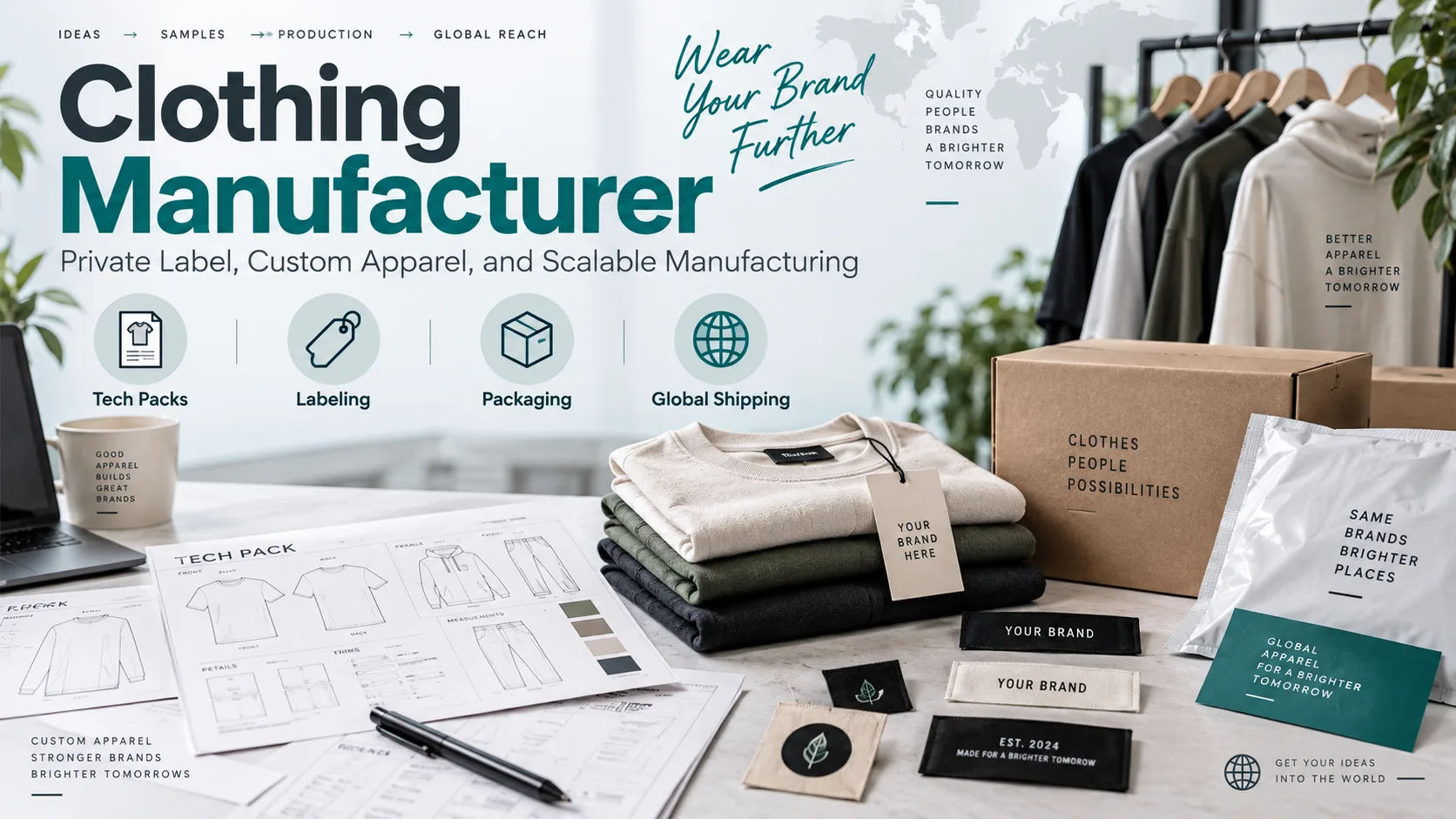
This can be particularly useful for startups, independent designers, small retailers, and businesses testing a new clothing line.Instead of ordering thousands of pieces before knowing whether customers will buy them, you may be able to begin with a much smaller quantity. This reduces the amount of money tied up in inventory and gives you more flexibility while developing your brand.
However, “low MOQ” does not mean exactly the same thing for every factory. One manufacturer may consider 20 pieces a low MOQ, while another may set its minimum at 100 or 200 pieces.
Understanding what the term actually means can help you compare manufacturers, calculate costs, and avoid unpleasant surprises during production.
What Does MOQ Mean in Clothing Manufacturing?
MOQ stands for Minimum Order Quantity. It refers to the minimum number of products a manufacturer requires you to order for a production run.
For example, imagine a factory says its MOQ is 100 pieces per style. You cannot normally order only 30 pieces of that particular design. You would need to order at least 100.
The MOQ exists because manufacturers have costs that remain relatively similar whether they produce a small or large quantity. These can include pattern development, cutting, machine setup, fabric purchasing, printing, embroidery, labeling, packaging, and quality control.
When a factory produces more units, these setup expenses can be spread across more garments.
A low MOQ clothing manufacturer is different because it is structured to accept smaller production quantities.
This does not necessarily mean the manufacturer has lower costs. In fact, the price per garment can sometimes be higher when you order a small quantity.
What Is Considered a Low MOQ?
There is no universal number that defines a low MOQ.
The answer depends on the manufacturer, garment type, materials, production method, and customization requirements.
For some clothing manufacturers, a low MOQ might be 20 to 50 pieces. Others may offer minimums around 100 pieces per style or color.
For highly customized garments, the minimum may be higher because the factory needs to purchase specific materials or create specialized patterns.
For simple products, such as basic T-shirts or hoodies, smaller quantities may be easier to produce.
This is why you should not judge a manufacturer solely by the number advertised as its MOQ. You also need to ask what that MOQ applies to.
A manufacturer might advertise a minimum of 50 pieces but require 50 pieces per color and size combination. Another might allow you to order 50 pieces across several sizes and colors.
Those two offers are very different.
How a Low MOQ Clothing Manufacturer Works
The basic production process is similar to working with a conventional clothing factory.
You normally begin by providing a design or technical specification. The manufacturer reviews the requirements and determines whether it can produce the garment.
The factory may then create a sample or prototype.
After you approve the sample, the manufacturer confirms fabric, trims, measurements, colors, labels, and other specifications. Once the production details are finalized, manufacturing begins.
The major difference is the quantity.
Instead of requiring a very large order, a low MOQ factory is prepared to produce a smaller batch.
This makes the relationship particularly useful when you are still learning how your customers respond to a product.
Why Do Clothing Brands Choose Low MOQ Manufacturing?
Lower Initial Inventory Risk
One of the biggest advantages is reduced inventory risk.
Suppose you have designed a new sweatshirt but have no reliable sales history. Ordering 2,000 pieces could require a significant investment.
If demand is weaker than expected, you are left with hundreds or thousands of garments that still need to be stored and sold.
A smaller order gives you an opportunity to test the market first.
If customers respond positively, you can place another order.
Easier Product Testing
Fashion businesses often need to test different designs, colors, fits, and materials.
A smaller production run allows you to introduce a product without committing to a huge quantity.
You can observe which styles receive the most attention and use that information when planning future collections.
This can be especially valuable for new brands that do not yet have reliable sales data.
Less Money Tied Up in Stock
Inventory requires cash.
If most of your available budget is spent on products that have not yet sold, you have less money available for photography, marketing, packaging, shipping, website development, and customer service.
A smaller order can help distribute your budget across different parts of the business.
Greater Flexibility
Small-batch production can make it easier to change direction.
If one design performs poorly, you do not necessarily need to continue producing it in large quantities.
You can discontinue it and focus on stronger products.
This flexibility can be valuable in an industry where consumer preferences can change quickly.
Is Low MOQ Always Better?
Not necessarily.
A low minimum order quantity is useful, but it is only one factor when choosing a manufacturer.
The price per garment may be higher because fixed production costs are spread across fewer pieces.
For example, a factory might charge more per T-shirt for an order of 50 pieces than for an order of 1,000 pieces.
That does not automatically make the smaller order a bad deal. You need to consider the total financial risk.
Paying slightly more per item may be sensible if it prevents you from investing heavily in products that may not sell.
However, if you already have strong demand, a larger order could provide better economies of scale.
What Are the Advantages of Working With a Low MOQ Clothing Manufacturer?
A low MOQ production model can provide several practical benefits.
It can lower the amount of capital required to launch a collection. It can make product testing easier and reduce excess inventory. It can also allow smaller brands to experiment with new designs without making a major financial commitment.
Another benefit is that small businesses can potentially create more frequent product releases.
Instead of producing one massive collection, a brand might release smaller batches throughout the year.
This approach can help businesses learn from actual customer behavior.
There is also a creative advantage. Designers may feel more comfortable experimenting when they are not required to manufacture thousands of units of every new idea.
What Are the Disadvantages?
There are trade-offs.
The most obvious is usually the unit price.
Small orders often cost more per garment because fabric, labor, setup, and other expenses cannot be distributed across a large production run.
Production options may also be more limited.
Some factories can offer low minimums only for certain fabrics, colors, printing methods, or garment styles.
You may also find that custom fabric development requires a higher quantity than standard fabric.
Lead times can vary as well. A smaller order does not automatically mean faster manufacturing.
Another concern is consistency between small production batches. If you reorder several months later, fabric lots, dye batches, or supplier materials may differ slightly.
For this reason, maintaining detailed specifications and approving samples is important.
Low MOQ Does Not Mean No MOQ
This distinction is important.
A low MOQ manufacturer still has a minimum order requirement.
If a factory says its MOQ is 50 pieces, you generally cannot expect it to produce a single garment at the same commercial price.
Very small quantities may fall into a sampling or custom-development category rather than normal production.
If you need only one or two pieces, you may need a sample maker, local tailor, print-on-demand provider, or another type of production service.
Low MOQ is mainly about making commercial manufacturing accessible at smaller volumes.
What Should You Ask a Manufacturer About MOQ?
Before placing an order, ask exactly how the MOQ is calculated.
Does the minimum apply to each style?
Does it apply separately to every color?
Is the minimum calculated across all sizes?
Can multiple designs be combined into one production order?
Does the MOQ apply to custom labels and packaging?
These questions can dramatically change the actual cost of an order.
For example, a quoted MOQ of 100 pieces sounds reasonable. But if the factory requires 100 pieces for every color, producing three colors could mean 300 garments.
Always request the MOQ terms in writing.
How Does MOQ Affect Clothing Costs?
MOQ and unit pricing are closely connected.
When an order is larger, fixed costs can be distributed across more garments.
Imagine a manufacturer has $500 in setup and preparation costs. If those costs are spread across 50 garments, they add $10 per garment before considering other production expenses.
If the same fixed cost is spread across 500 garments, it adds only $1 per garment.
This is one reason larger orders often receive lower unit prices.
A low MOQ clothing manufacturer may therefore charge more per piece while offering a lower total financial commitment.
The important number for a new brand is not simply the unit price. You should look at the complete cost of production and the amount of capital you must commit.
Who Should Use Low MOQ Manufacturing?
Small clothing brands are obvious candidates.
It can also be useful for independent designers, online stores, fashion startups, influencers launching merchandise, boutique retailers, and businesses testing a new product category.
It is particularly helpful when demand is uncertain.
For an established company with predictable sales, larger production quantities may be more economical.
For a new company with limited sales data, smaller orders can provide valuable flexibility.
How to Choose the Right Manufacturer
Do not choose a factory simply because it advertises the lowest MOQ.
Look at garment quality, communication, production capabilities, sample quality, pricing, materials, lead times, and quality-control procedures.
Ask for samples before committing to a substantial production order.
Examine stitching, seams, fabric weight, measurements, print quality, embroidery, labels, zippers, buttons, and finishing.
Communication matters too.
A manufacturer that clearly answers questions and documents specifications can be much easier to work with than one that offers a very attractive price but communicates poorly.
You should also make sure the factory can produce the specific type of clothing you need.
A manufacturer experienced in basic T-shirts may not have the same expertise with structured jackets, technical sportswear, denim, or complex dresses.
Questions to Ask Before Placing an Order
Ask the manufacturer what its exact MOQ is and how it calculates that minimum.
Ask whether the MOQ applies per style, color, size, or total order.
Ask whether samples are included or charged separately.
Ask about fabric availability and whether you can supply your own materials.
Ask about production lead times.
Ask whether custom labels, hangtags, packaging, and embroidery have separate minimums.
You should also ask about payment terms, shipping arrangements, quality inspection, and what happens if defective products are discovered.
Getting clear answers before production begins can prevent expensive misunderstandings later.
Conclusion
A low MOQ clothing manufacturer gives smaller brands an opportunity to manufacture clothing without committing to the large quantities traditionally associated with factory production.
The main attraction is flexibility. You can test designs, evaluate customer demand, reduce excess inventory, and protect more of your working capital.
However, low MOQ does not automatically mean low cost. Smaller production runs can have higher per-unit prices, fewer customization options, and different material requirements. The right choice depends on your business model, expected demand, budget, and product specifications.
The best approach is to treat MOQ as one part of the overall manufacturing decision. Look beyond the advertised minimum and find out exactly how the manufacturer applies it to styles, colors, sizes, fabrics, labels, and packaging.
For a new clothing brand, starting smaller can be a practical way to learn before scaling. Once a product consistently sells, larger production runs may provide better pricing and margins. In that sense, low MOQ manufacturing is not simply about ordering fewer clothes. It is about managing risk while giving your brand room to grow.