

Starting a clothing brand can be exciting, but it can also become expensive very quickly if a manufacturer expects hundreds or thousands of pieces per design. This is why many new brands look for a low MOQ clothing manufacturer that allows them to start with smaller production quantities, test their designs, and build their business without carrying too much unsold inventory.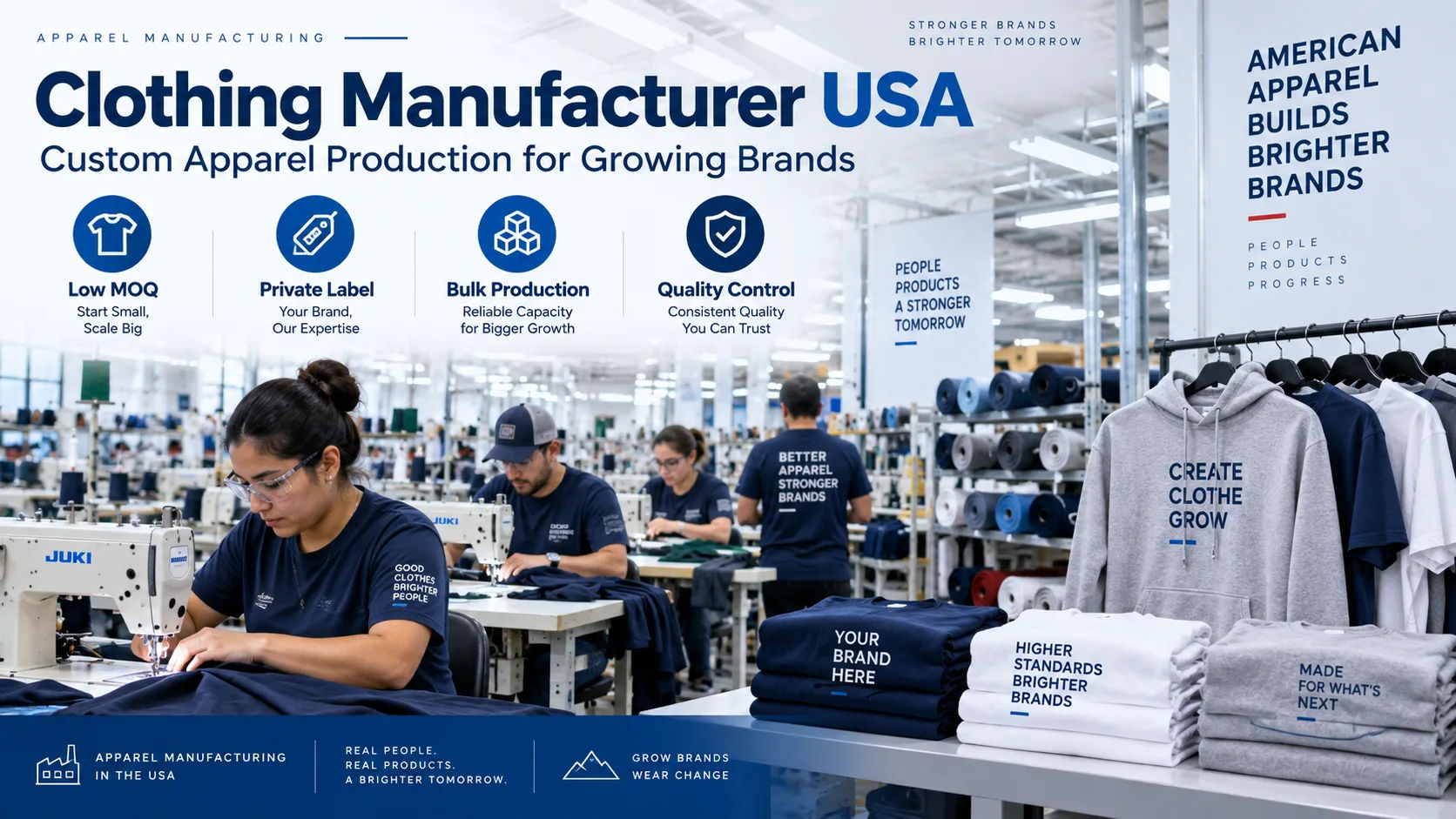
MOQ means “Minimum Order Quantity.” It refers to the smallest number of products a manufacturer is willing to produce for one order or production run. A traditional manufacturer may require a large MOQ because bulk production helps reduce its production costs. A low-MOQ manufacturer works differently and is generally more open to smaller brands, startup labels, boutique businesses, and designers.
However, choosing a manufacturer with a low minimum does not mean you can provide only a rough idea and expect finished garments immediately. Manufacturers still require important information about your products, fabrics, designs, sizing, quantities, and quality expectations.
Understanding these requirements before contacting a manufacturer can save time, reduce misunderstandings, and make the production process much smoother.
What Does MOQ Mean in Apparel Manufacturing?
MOQ stands for Minimum Order Quantity. In apparel manufacturing, it represents the minimum number of garments a factory will accept for production.
For example, a manufacturer might normally require 500 pieces per style but offer a low MOQ of 50 or 100 pieces. This can make a major difference for a small clothing brand.
A lower MOQ allows you to test a product before committing to a large production run. If customers respond well to the design, you can place a larger repeat order later.
MOQ can apply to different aspects of production. Some factories calculate MOQ per style, while others calculate it per color, fabric, or size.
This distinction is important.
A factory might say its MOQ is 100 pieces, but that could mean 100 pieces of one design and one color. Another factory might allow 100 pieces divided between several colors.
Always ask how the MOQ is calculated before placing an order.
What Does a Low MOQ Clothing Manufacturer Usually Require?
A low MOQ manufacturer still needs enough information to understand exactly what you want to produce.
The smaller order quantity does not remove the need for proper specifications. In fact, accurate information becomes even more important because small production runs can leave less room for mistakes.
Most manufacturers will ask for several basic details before giving you a final quotation.
A Clear Clothing Design
The first requirement is usually a clear description of the garment.
You should be able to explain whether you want T-shirts, hoodies, jackets, trousers, dresses, sportswear, uniforms, or another type of clothing.
If possible, provide a technical sketch, reference image, drawing, or existing garment sample.
A manufacturer needs to understand the shape, construction, details, and appearance of the product.
A simple photo can be useful during the initial conversation, but it may not contain enough information for production.
Tech Pack or Product Specifications
A tech pack is one of the most useful documents you can provide.
It can include measurements, fabric information, stitching details, colors, labels, trims, artwork placement, and construction instructions.
Not every beginner has a professional tech pack. Some manufacturers can help develop specifications from a sample or basic design.
However, the more detailed your information is, the easier it becomes for the factory to understand your expectations.
For complicated garments, a detailed tech pack can prevent expensive misunderstandings.
Fabric Requirements
Fabric is another major requirement.
You should tell the manufacturer what type of material you want, such as cotton, polyester, fleece, denim, linen, viscose, nylon, or a blended fabric.
You may also need to specify fabric weight.
For example, a lightweight T-shirt and a heavyweight streetwear T-shirt can use completely different fabric weights even if both are made from cotton.
If you do not know the exact fabric specification, ask the manufacturer to provide available options.
A good factory may send fabric swatches so you can compare texture, thickness, stretch, softness, and appearance before production begins.
Size Range and Size Breakdown
Manufacturers need to know which sizes you want to produce.
For example, your order might include XS, S, M, L, XL, and XXL.
You also need to decide how many pieces should be produced in each size.
This is called the size breakdown.
Suppose your MOQ is 100 pieces. You might want 10 XS, 20 S, 25 M, 25 L, 15 XL, and 5 XXL.
The exact distribution depends on your target customers.
Do not automatically assume that an equal number of every size is the best option. Your previous sales data, target market, and product category should influence your decision.
A low MOQ clothing manufacturer may also have restrictions on size combinations, so confirm these rules before production.
Color Requirements
Color selection can affect MOQ.
Some manufacturers have a minimum quantity for each color because changing colors during production can create additional setup and cleaning work.
For example, a factory might accept 100 pieces of one color but require 50 pieces per additional color.
This means a total order of 100 pieces may not automatically allow you to produce ten different colors.
Ask the manufacturer whether the MOQ applies to the entire style or each individual color.
This question can prevent unpleasant surprises later.
Branding and Label Requirements
If you are creating your own clothing brand, the manufacturer will need information about branding.
This can include:
-
Main woven labels
-
Printed neck labels
-
Size labels
-
Care labels
-
Hangtags
-
Packaging
-
Embroidery
-
Screen printing
-
Heat-transfer graphics
-
Woven patches
Some manufacturers include basic labeling in their prices, while others charge separately.
You should also provide your logo in a suitable format. A high-quality vector file is usually preferable for professional production.
If you want embroidery, the manufacturer may need an embroidery-ready file or may charge a digitizing fee.
Packaging Requirements
Packaging is often overlooked by new clothing brands.
You need to decide how you want your finished products packed.
For example, garments may be individually folded and placed in clear bags. They may then be packed into cartons for shipping.
If you want custom packaging, such as branded bags, boxes, stickers, tissue paper, or special tags, the manufacturer needs to know this before production.
Custom packaging can also have its own MOQ, which may be higher than the garment MOQ.
This is one reason why a manufacturer advertising very low garment quantities may still have higher requirements for customized packaging.
Artwork and Printing Requirements
If your clothing includes graphics, you need to provide the artwork.
The manufacturer may ask for a high-resolution file, preferably in a professional format.
You should also specify the printing method if you have a preference.
Common options include screen printing, DTG printing, DTF printing, sublimation, heat transfer, and embroidery.
The best method depends on the fabric, design, quantity, durability requirements, and budget.
For small orders, certain printing methods may be more practical than others.
A reliable low MOQ clothing manufacturer should be able to explain which decoration method is suitable for your design.
Sample Approval
A sample is extremely important before bulk production.
Even if you provide detailed specifications, the first sample may not be perfect.
The fit may need adjustment. The fabric may feel different from what you expected. The print may appear too large or too small. The color may also look different under natural lighting.
This is why you should inspect a sample before approving bulk production.
Ask whether the sample fee is refundable or deducted from the bulk order.
Some manufacturers offer free samples under certain conditions, while others charge separately for development.
Do not skip sampling simply because your order is small.
Budget and Target Price
A manufacturer will usually need to know your approximate target price or budget.
This does not mean you have to reveal every detail of your business finances.
Instead, you can discuss your expected manufacturing price based on the product specifications.
For example, a basic cotton T-shirt with simple printing will have a very different production cost from a heavyweight embroidered jacket with custom hardware.
Your target price helps the manufacturer recommend appropriate materials and production methods.
Remember that the factory price is not your complete product cost.
You may also need to pay for sampling, packaging, labels, shipping, customs, taxes, artwork preparation, and other services.
Production Timeline
Time requirements should be discussed before placing an order.
Ask how long sampling will take and how long bulk production normally requires.
You should also ask whether the production timeline starts after payment, sample approval, fabric approval, or another milestone.
This matters if you are preparing for a product launch or seasonal collection.
A manufacturer may have a low MOQ but a long production queue.
Therefore, low MOQ should not be your only selection criterion.
Reliability and communication are equally important.
Payment Requirements
Most manufacturers require some payment before starting production.
The exact payment structure varies.
A manufacturer may request a deposit before purchasing materials and the remaining balance before shipment.
Always confirm the payment schedule in writing.
Also ask which costs are included in the quoted price and which are separate.
A very low quoted price can become much higher when sampling, labels, packaging, shipping, and other charges are added.
Quality Standards
Before production begins, explain what level of quality you expect.
This can include stitching quality, fabric weight, color consistency, print durability, embroidery density, zipper quality, buttons, seams, measurements, and finishing.
For larger brands, quality control may involve formal inspection standards.
For smaller businesses, a detailed checklist can still be extremely useful.
You should know what defects are acceptable and what defects would require replacement or correction.
Communication and Production Information
A manufacturer needs clear communication from the beginning.
Provide information in an organized manner instead of sending random details across multiple messages.
Ideally, keep your design information, measurements, artwork, fabric requirements, and branding instructions together.
Ask questions about anything you do not understand.
A professional low MOQ clothing manufacturer should be willing to explain production requirements rather than simply accepting an order without clarification.
Good communication also helps when changes are needed during sampling.
What Should You Ask Before Choosing a Manufacturer?
Before committing to a supplier, ask several practical questions.
Ask about the exact MOQ and whether it applies per style, color, or size.
Ask whether samples are available and what they cost.
Ask how long sampling and bulk production take.
Ask whether the factory can source your preferred fabric.
Ask about custom labels and packaging.
Ask how quality problems are handled.
Ask about payment terms.
Ask whether the quoted price includes packaging.
Ask about shipping options and delivery terms.
These questions can reveal whether a manufacturer is genuinely suitable for a small clothing business.
Why Low MOQ Can Be Useful for New Brands
The biggest advantage of working with a low MOQ supplier is reduced inventory risk.
Imagine spending a large amount of money producing 1,000 pieces of a design that customers do not like.
You may have to discount the products or keep them in storage for months.
With smaller production quantities, you can test products before scaling.
This makes low MOQ particularly useful for startup brands, independent designers, influencers, online sellers, and boutique businesses.
You can also experiment with different designs.
Instead of producing one massive collection, you can launch several smaller products and see which ones perform best.
What Are the Downsides of Low MOQ Production?
Low MOQ does not automatically mean lower prices.
Large factories benefit from economies of scale. When production quantities increase, material purchasing and production costs can often be spread across more garments.
A small order may therefore have a higher per-unit cost.
Another issue is fabric availability.
Some specialized fabrics may have their own minimum purchasing quantities. Even if the factory accepts 30 garments, the fabric supplier may require a much larger amount.
Small orders may also have fewer customization options.
For this reason, you should evaluate the complete production cost rather than focusing only on the advertised MOQ.
How to Prepare Before Contacting a Manufacturer
You can make the process much easier by preparing your information first.
Create a basic product brief.
Include the garment type, estimated quantity, sizes, colors, fabric preference, logo requirements, printing or embroidery requirements, labels, packaging, and delivery location.
You do not need to be a professional fashion designer to do this.
The goal is simply to give the manufacturer enough information to understand what you want.
If you are still unsure about fabric or construction, say so.
An experienced manufacturer may be able to recommend practical alternatives.
How Many Pieces Should You Order?
There is no universal answer.
Your ideal quantity depends on your budget, expected demand, product price, and sales channel.
If you are launching your first product, a small test batch can make sense.
Once you understand customer demand, you can increase your next order.
This approach is often safer than spending heavily before you know whether a product will sell.
However, you should also compare the unit price at different quantities.
Sometimes increasing the order slightly can reduce the per-piece cost enough to make the larger batch financially reasonable.
Conclusion
A low MOQ apparel manufacturer generally requires many of the same details as a traditional clothing factory. The main difference is that the manufacturer is willing to work with smaller production quantities.
You should still provide clear information about your designs, fabric, measurements, sizes, colors, artwork, branding, packaging, and quality expectations.
Samples are particularly important. Never assume that a manufacturer understands your product perfectly just because you have sent a photograph or basic description.
Before placing an order, confirm the MOQ, sample cost, production timeline, payment terms, customization options, and additional charges. Also find out whether minimum quantities apply to the complete order or separately to styles, colors, fabrics, and packaging.
The right low MOQ clothing manufacturer can help a new brand reduce inventory risk while testing products in the real market. It gives you room to experiment without immediately committing to a huge production run.
At the same time, low MOQ should not be the only factor in your decision. Manufacturing quality, communication, consistency, pricing, sample accuracy, delivery reliability, and willingness to solve problems all matter.
In my experience, the best approach is to treat your first order as both a production run and a learning exercise. Start with a manageable quantity, approve a proper sample, document your specifications, and track how customers respond. If the product performs well, you can gradually increase your order quantities and negotiate better pricing as your brand grows.
The goal is not simply to find a factory that accepts the smallest possible order. The real goal is to find a manufacturer that can produce your clothing consistently at a quantity and price that make sense for your business.