

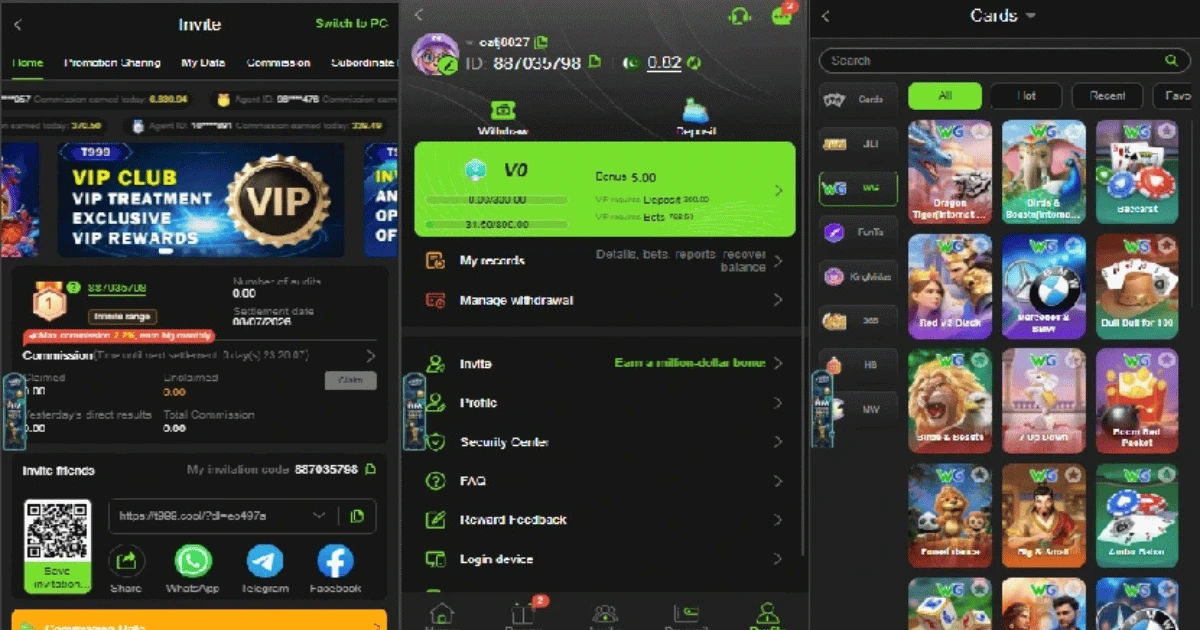
Online games are often viewed simply as entertainment, but many games also require players to think, plan, remember information, solve problems, and make quick decisions. For example, a game such as T999 Game Download may involve activities that require attention, timing, strategy, and repeated decision-making. The exact cognitive benefits depend on the type of game, how it is played, and how much time a person spends playing.
Cognitive skills are the mental abilities people use to process information and respond to situations. These skills are important in school, work, communication, and everyday life. While playing games cannot replace studying or real-world practice, certain well-designed games can provide opportunities to exercise these abilities.
The key is to understand what a game actually requires from the player. A fast-paced game may challenge reaction speed, while a puzzle game may focus more on logical reasoning. Strategy games can encourage planning, and memory-based games can help players practice recalling information.
Cognitive Skills
Cognitive skills are the abilities involved in thinking and learning. They allow people to understand information, remember details, solve problems, concentrate on tasks, and make decisions.
Several major cognitive skills can be involved during online gaming.
These include:
-
Attention and concentration
-
Memory
-
Problem-solving
-
Logical reasoning
-
Decision-making
-
Processing speed
-
Spatial awareness
-
Planning
-
Cognitive flexibility
-
Pattern recognition
Not every game develops all of these skills equally. The experience depends heavily on the game's design.
How Online Games Can Improve Attention
Attention is the ability to focus on relevant information while ignoring distractions. Many online games require players to monitor several things at once.
A player may need to watch the screen, follow instructions, observe changes, and respond to events. This creates an environment where sustained attention can become important.
For instance, while using a platform such as T999 Game Download, a player may need to remain focused on changing visual information and respond according to the rules of the particular game.
Games can also require selective attention. This means noticing important information while ignoring less useful details.
However, this does not mean every gaming session automatically improves concentration. The benefit depends on the game's cognitive demands and the player's habits.
Memory and Information Recall
Memory is another cognitive ability that games can exercise.
Players frequently need to remember rules, locations, patterns, previous outcomes, instructions, or sequences. They may also remember which actions worked previously and which strategies were unsuccessful.
This can involve both short-term and working memory.
Working memory allows a person to hold information temporarily while using it. For example, a player might remember an instruction while simultaneously deciding what action to take.
Games that require remembering patterns or sequences may provide repeated practice with this type of mental activity.
A game such as T999 Game Download may contain different mechanics or challenges depending on the version and platform. Players should therefore consider the actual tasks involved rather than assuming that every game offers identical cognitive benefits.
Problem-Solving Skills
Problem-solving is one of the most obvious cognitive abilities associated with many games.
When players encounter a challenge, they need to identify the problem and determine how to respond. They may test different approaches and learn from unsuccessful attempts.
This process can encourage analytical thinking.
For example, if one strategy produces an undesirable result, the player can examine what happened and try another approach. Over time, this creates a cycle of observation, evaluation, and adjustment.
Puzzle, strategy, simulation, and adventure games can be particularly useful for this type of thinking because they often require players to understand systems and find solutions.
Decision-Making Under Pressure
Many games require decisions within a limited amount of time.
Players may have to choose between different actions based on the information available to them. This can encourage rapid evaluation and decision-making.
The player may consider possible outcomes before selecting an action. In faster games, there may be very little time for deliberate analysis.
Using T999 Game Download as an example does not mean that every version necessarily develops decision-making in the same way. The cognitive experience depends on the specific game mechanics.
In general, games that require meaningful choices can provide practice in evaluating options.
Processing Speed
Processing speed refers to how quickly the brain can receive, understand, and respond to information.
Fast-paced games often require players to recognize visual or auditory signals and react quickly. This may involve repeatedly connecting perception with physical action.
For example, a player might see an object appear and immediately decide whether to move, avoid it, select it, or perform another action.
Repeated exposure to these situations can make the player more familiar with the game's environment and controls.
However, faster responses within a particular game should not automatically be interpreted as a broad improvement in every area of mental performance. Cognitive abilities are complex and depend on many factors.
Spatial Awareness
Some online games require players to understand where objects are located in relation to one another.
This is known as spatial awareness.
Three-dimensional games can require players to navigate environments, estimate distances, recognize directions, and understand movement. These activities can involve mental representations of space.
For example, a player may need to remember where a location is and determine the best route to reach it.
Games that involve maps, navigation, construction, or movement can therefore provide opportunities to practice spatial reasoning.
Planning and Strategic Thinking
Planning is the ability to consider future actions before acting.
Strategy-based games often make this skill particularly important. Players may need to think several steps ahead rather than responding only to what is happening immediately.
Good planning involves identifying a goal, considering available resources, evaluating possible actions, and selecting an approach.
A player using T999 Game Download may encounter different levels or challenges depending on the particular game involved. If the game includes strategic choices, players may practice planning within that environment.
Strategic thinking can also be useful outside gaming. Students use it when organizing assignments, preparing for examinations, or managing deadlines.
Pattern Recognition
Pattern recognition involves identifying repeated structures or relationships.
Humans use pattern recognition constantly. It helps us understand language, mathematics, visual information, and everyday situations.
Many games include repeated patterns. Players may learn to recognize familiar sequences, movements, layouts, or combinations.
Once a player identifies a pattern, they may respond more efficiently.
Puzzle and strategy games often make pattern recognition a central part of gameplay, while other games may use it more indirectly.
Cognitive Flexibility
Cognitive flexibility means being able to change your thinking or strategy when circumstances change.
This skill matters because real-world situations rarely remain exactly the same.
Games can create situations where a previously successful strategy stops working. Players then have to reconsider their approach.
For example, if an expected action does not produce the desired outcome, the player may need to experiment with another option.
This ability to adapt can be valuable in academic and professional settings.
Learning Through Feedback
One important feature of many online games is immediate feedback.
A player performs an action and quickly sees the result. They can then decide whether to repeat, modify, or abandon that approach.
This creates a learning loop:
Action → Result → Evaluation → Adjustment
Such feedback can encourage experimentation.
When players understand why something worked or failed, they can gradually improve their performance within the game.
The same general learning principle can be useful in education. Students often improve when they receive clear feedback and have an opportunity to correct mistakes.
Hand-Eye Coordination and Cognitive Processing
Online games can also involve coordination between visual information and physical movement.
Players may need to observe something on the screen and immediately move a mouse, keyboard key, controller, or touchscreen.
This combines perception with motor response.
Although hand-eye coordination is not purely a cognitive skill, it interacts closely with attention, perception, and processing speed.
Different games place different demands on this coordination. A slower puzzle game may require precise selection, while a fast action game may require rapid responses.
Can Games Improve Academic Performance?
This question requires a balanced answer.
Playing games does not automatically make someone better at mathematics, science, writing, or other school subjects.
However, some cognitive skills practiced in games can overlap with abilities used in academic learning.
For example, attention can help students remain focused during lessons. Memory supports learning new information. Problem-solving is important in mathematics and science. Planning helps students manage assignments.
The connection is therefore possible but not automatic.
A student who spends excessive amounts of time gaming may also reduce the time available for studying, sleep, exercise, and social activities. Balance remains important.
The Importance of Game Type
Not all online games have the same cognitive demands.
A puzzle game may focus heavily on reasoning. A strategy game may involve planning and resource management. A fast-paced game may emphasize reaction and visual attention.
A simple entertainment game may require relatively little strategic thinking.
Therefore, saying that "online games improve cognitive skills" is too broad.
A more accurate statement is that some types of games can provide repeated practice with specific mental tasks.
Players should look at what the game actually asks them to do.
How to Use Gaming in a Healthy Way
Gaming can be more beneficial when it is part of a balanced lifestyle.
Players should avoid allowing gaming to interfere with sleep, school, work, physical activity, or relationships.
Taking regular breaks is also important. Long periods of continuous screen use can contribute to tiredness and discomfort.
A healthy routine might include time for:
-
School or work
-
Physical activity
-
Sleep
-
Family and friends
-
Hobbies
-
Gaming
-
Relaxation
Someone interested in T999 Game Download should also understand the game's rules, platform requirements, privacy considerations, and any age restrictions before playing.
Avoiding Excessive Gaming
The amount of time spent gaming matters.
Even a game that provides mentally challenging activities can become problematic when gaming begins to interfere with everyday responsibilities.
Warning signs can include regularly ignoring school or work, losing sleep because of gaming, avoiding important activities, or feeling unable to stop despite negative consequences.
The goal should not be to eliminate every form of gaming. Instead, people should maintain reasonable boundaries.
Setting a specific gaming period can make it easier to keep entertainment from taking over the day.
Does More Gaming Mean More Cognitive Benefits?
Not necessarily.
More time does not always equal greater cognitive improvement.
Many cognitive benefits associated with games are related to the specific tasks being practiced rather than the total number of hours spent playing.
For example, repeatedly practicing a particular visual task may improve familiarity with that task. That does not guarantee a similar improvement in unrelated activities.
Quality, variety, balance, and purpose are more meaningful considerations than simply increasing playing time.
Choosing Games That Encourage Thinking
If the goal is to exercise cognitive abilities, players can look for games that require active participation rather than passive observation.
Useful features may include:
-
Puzzles
-
Strategy
-
Planning
-
Memory challenges
-
Pattern recognition
-
Resource management
-
Navigation
-
Logical decision-making
-
Problem-solving
A game does not need to be educational to involve these skills.
Even entertainment-focused games can require substantial mental effort when their mechanics encourage players to analyze information and make decisions.
Online Gaming and Social Thinking
Some online games involve interaction with other players.
These games may require communication, cooperation, negotiation, and teamwork.
Players may need to explain ideas, listen to teammates, coordinate actions, and adjust their plans based on other people's behavior.
These are not purely cognitive abilities, but they involve complex thinking and communication.
Team-based games can therefore create situations where players practice coordinating with others toward a shared objective.
At the same time, online communication should be handled responsibly. Players should protect personal information and use appropriate privacy and safety settings.
Critical Thinking About Gaming Claims
It is important to be skeptical of exaggerated claims about cognitive improvement.
A game developer or website may describe a game as "brain training," but marketing language does not necessarily prove that playing the game creates broad improvements in intelligence.
Cognitive science is more complicated.
A person can become very skilled at a particular game because they have practiced it repeatedly. That skill may not transfer completely to unrelated tasks.
For this reason, games should be viewed as one possible form of mental activity rather than a replacement for education, reading, exercise, or real-world problem-solving.
How Parents and Students Can Create Balance
Parents and students can approach gaming with reasonable expectations.
Instead of focusing only on whether gaming is good or bad, it is more useful to ask what the game involves and how it fits into the person's daily routine.
A student can enjoy gaming after completing important responsibilities.
Parents can also discuss screen-time expectations and online safety without treating every game as harmful.
For younger players, age ratings and appropriate content should be considered before using any gaming platform or service.
Conclusion
Online games can involve many different cognitive skills, including attention, memory, problem-solving, processing speed, spatial awareness, planning, pattern recognition, and cognitive flexibility. The potential benefits depend on the game's design and the way it is played.
A platform or title associated with T999 Game Download may provide particular challenges, but players should evaluate those challenges based on the actual mechanics rather than assuming that every online game produces the same mental benefits.
The most important point is balance. Gaming can be an enjoyable way to challenge the mind, but it works best alongside other activities that support healthy development.
Reading, studying, physical exercise, creative hobbies, face-to-face communication, and adequate sleep all contribute to strong overall cognitive functioning.
Ultimately, an online game is a tool for entertainment and, in some cases, mental practice. Its value depends on how thoughtfully it is used. When players choose appropriate games, understand their limits, and maintain a balanced routine, gaming can become one of many activities that keep the mind engaged.
Rather than asking whether every online game is beneficial, a better question is: What does this particular game make the player think about, remember, decide, and solve?
That question provides a much clearer way to understand the cognitive skills an online game can build.