

Mobile devices have become powerful enough to run games with impressive graphics, smooth animations, and complex gameplay. However, even modern smartphones can experience slowdowns, unexpected lag, overheating, and performance issues after extended use. These problems can make gaming frustrating, especially when a player wants a consistent and enjoyable experience. One simple solution that many people overlook is restarting their device.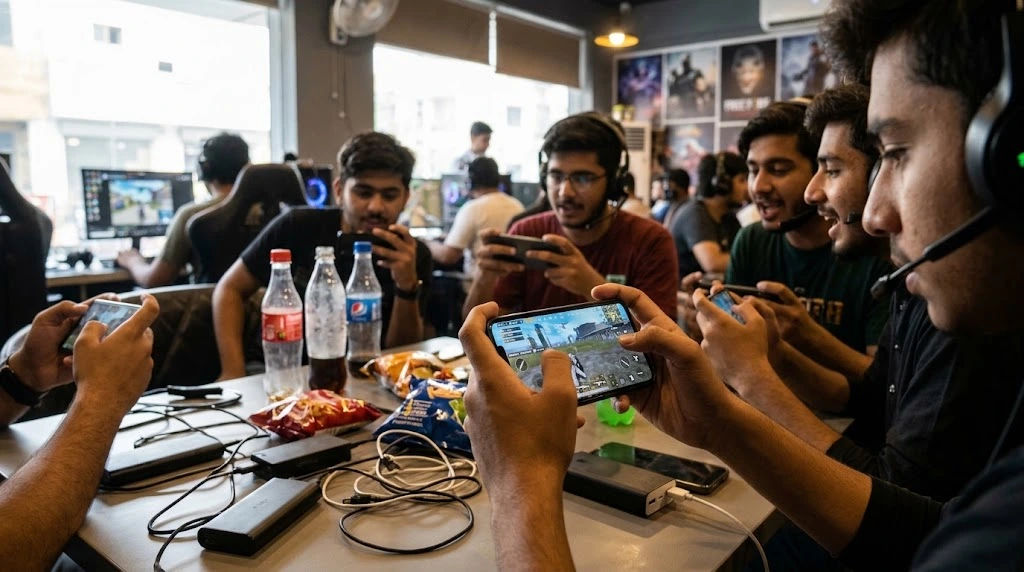
Restarting a smartphone can improve Mobile App Gaming performance by refreshing system resources, closing background processes, clearing temporary memory usage, and resolving certain software-related problems. Although restarting is not a permanent solution for every gaming issue, it can help restore smoother performance when a device becomes overloaded.
Understanding why restarting works, when it is useful, and how frequently it should be done can help players maintain their smartphones more effectively. This comprehensive guide explains the relationship between restarting and gaming performance, explores its benefits and limitations, and provides practical recommendations for a better gaming experience.
Why Smartphones Become Slower During Gaming
Smartphones perform several operations simultaneously. While a player is enjoying a game, the device may also manage notifications, internet connections, background applications, system updates, and other services.
These activities consume processing power, memory, and battery resources. When too many operations compete for limited resources, gaming performance can suffer.
Background Applications Consume Resources
Many smartphone applications continue running even after users leave them. Social media platforms, messaging applications, music players, and other services may remain active in the background.
These applications can consume random access memory (RAM), processing power, and battery capacity.
When a demanding game needs additional resources, background activities may reduce the amount available for gameplay. This can result in slower loading, inconsistent frame rates, or occasional freezing.
Restarting the smartphone closes most active applications and gives the operating system a fresh start.
Temporary System Processes Build Up
Smartphones continuously create temporary processes while performing everyday tasks. These processes help applications operate efficiently, but certain software problems can cause processes to remain active longer than necessary.
Over time, unnecessary background activity may affect system responsiveness.
Restarting stops and reloads many system processes. This can resolve temporary problems that interfere with gaming.
Memory Management Can Affect Performance
RAM plays an important role in smartphone gaming. It stores information that applications need to access quickly.
When available memory becomes limited, the operating system may need to manage applications more aggressively. Some applications might reload when users switch between them, while demanding games may experience interruptions.
Restarting can release memory occupied by temporary processes. However, modern operating systems already manage RAM automatically, so manually clearing memory is not always necessary.
How Restarting Improves Mobile App Gaming Performance
Mobile App Gaming pkr98 smartphone is a straightforward maintenance technique. It does not upgrade hardware or permanently increase processing power, but it can remove temporary problems that affect performance.
1. Refreshes System Memory
One of the main benefits of restarting is refreshing the device's memory environment.
When several applications have been running for hours, some processes may continue consuming resources. Restarting closes those processes and allows the operating system to allocate memory again.
This can be particularly helpful when a smartphone has limited RAM.
For example, someone who regularly switches between video streaming, messaging, browsing, and gaming might notice slower performance after several hours.
A restart can reduce unnecessary background activity and create a cleaner environment for demanding games.
However, it is important to understand that memory management varies between Android and iOS devices. Both systems automatically manage available memory, and constantly clearing RAM is not recommended as a routine performance strategy.
2. Resolves Temporary Software Glitches
Software glitches can affect gaming performance in several ways.
A game might suddenly become unresponsive, display unusual graphical behavior, or take longer than expected to load. Sometimes, the problem comes from a temporary operating system issue rather than the game itself.
Restarting shuts down active processes and reloads essential system services.
This can resolve minor software conflicts without requiring users to uninstall applications or reset their smartphones.
For players experiencing occasional performance problems, restarting is often a sensible first troubleshooting step.
3. Improves System Responsiveness
A smartphone that has been running continuously for several days may occasionally become less responsive because of temporary software issues or accumulated background activity.
Menus might take longer to open, touch responses may feel delayed, and applications may take additional time to launch.
Restarting can refresh the operating system and restore normal responsiveness.
This improvement can make gaming controls feel more consistent, particularly when players navigate between menus, launch multiplayer sessions, or switch applications.
4. Helps Restore Network Connections
Online gaming depends heavily on stable internet connectivity.
Sometimes, smartphone network services experience temporary problems. Wi-Fi connections may become unstable, mobile data may stop responding correctly, or network-related processes may behave unexpectedly.
Restarting can refresh network services and establish a new connection.
This may help resolve certain connectivity problems affecting online gaming.
However, restarting cannot fix weak Wi-Fi signals, overloaded networks, internet service provider outages, or high server latency.
Players should also check their router, network signal, and game server status when connection problems continue.
Does Restarting Improve Gaming Speed and Frame Rates?
Restarting can improve gaming performance under certain conditions, but it does not automatically increase a smartphone's maximum gaming capabilities.
Frame rate depends on several factors, including processor performance, graphics hardware, available memory, temperature, game optimization, and graphics settings.
If background applications are consuming significant resources, restarting may allow the game to run more smoothly.
For example, a game that experiences occasional stuttering because of unnecessary background activity might become more stable after restarting.
However, if the smartphone cannot handle the game's graphics requirements, restarting will not solve the underlying hardware limitation.
Understanding Frame Rate Stability
Frame rate measures how many individual frames a device displays each second.
A higher frame rate generally produces smoother movement and more responsive gameplay.
Some games support 30, 60, 90, or even 120 frames per second, depending on device compatibility.
Restarting may help improve frame rate consistency when temporary software problems are responsible for performance drops.
However, it cannot transform a smartphone designed for 30 FPS gaming into a device capable of consistently delivering 120 FPS.
Reducing Unexpected Stuttering
Stuttering occurs when gameplay briefly becomes uneven or interrupted.
Possible causes include:
-
Limited available RAM.
-
Background application activity.
-
Overheating.
-
Poor game optimization.
-
Insufficient storage space.
-
Software compatibility problems.
-
Unstable network connections.
Restarting may address memory-related or temporary software problems.
If stuttering continues after restarting, players should investigate other possible causes instead of repeatedly rebooting their devices.
When Should You Restart Your Smartphone for Better Gaming?
Restarting can be useful in different situations, but it is not necessary before every gaming session.
Understanding when a restart is appropriate can save time and help users maintain their devices without unnecessary interruptions.
After Extended Smartphone Usage
If a smartphone has remained active for several days and begins experiencing unusual slowdowns, restarting may help.
Continuous usage can sometimes expose temporary software issues that disappear after the operating system reloads.
Players who frequently use demanding applications may benefit from an occasional restart when performance becomes inconsistent.
When Games Start Freezing
If a game suddenly freezes or becomes unresponsive, restarting the smartphone can help resolve temporary system problems.
Before restarting, users can try closing and reopening the game.
If the problem continues, a full device restart is a reasonable next step.
Repeated freezing may indicate a deeper issue involving application compatibility, storage, overheating, or software bugs.
After Installing System Updates
Operating system updates sometimes require a restart to complete installation and activate important changes.
These updates may include security improvements, performance optimizations, compatibility fixes, and bug corrections.
Once the update process is complete, restarting can help ensure that the smartphone operates with the updated system components.
When Switching Between Demanding Applications
Some users regularly move between video editing applications, streaming services, browsers, and mobile games.
These activities can place considerable demands on smartphone resources.
If the device starts responding slowly after extended multitasking, restarting may help restore normal behavior before another demanding gaming session.
Step-by-Step Guide to Restarting a Smartphone Correctly
Restarting a smartphone is simple, but following the correct process can prevent unnecessary interruptions.
Step 1: Save Your Game Progress
Before restarting, make sure your progress is saved.
Many modern games automatically synchronize progress with online accounts. However, offline games may store information locally.
Check whether the current session has been saved to avoid losing important progress.
Step 2: Close Active Applications
Close applications that are currently running if they are unresponsive or causing problems.
This is not always necessary because restarting normally closes active processes, but saving your work first is important.
Step 3: Open the Power Menu
Press and hold the power button until the smartphone displays its power options.
Some newer devices require pressing the power button together with a volume button.
Select the restart option if it is available.
Step 4: Allow the Device to Reboot
Wait until the smartphone completely shuts down and starts again.
Avoid repeatedly pressing buttons while the operating system is loading.
The device may take a little longer to restart if it is installing updates or performing maintenance tasks.
Step 5: Launch Your Game
After restarting, allow essential system services to finish loading.
Open your preferred game and observe its performance.
Compare loading times, responsiveness, and gameplay stability with your previous experience.
This helps determine whether restarting actually improved the issue.
Other Ways to Improve Mobile App Gaming Performance
Restarting is helpful, but it should be combined with other maintenance practices when necessary.
A well-maintained smartphone can provide a more consistent gaming experience without requiring frequent troubleshooting.
Keep Your Smartphone Storage Available
Insufficient storage can affect application installation, updates, temporary files, and general system operations.
Although free storage does not directly increase gaming performance in every situation, maintaining reasonable available space helps the operating system and applications function properly.
Remove unnecessary downloads, duplicate files, and applications that you no longer use.
Avoid deleting unfamiliar system files because doing so may cause software problems.
Update Games Regularly
Game developers frequently release updates to improve compatibility, fix bugs, and optimize performance.
An outdated game may contain problems that have already been corrected in a newer version.
Check your application store regularly and install updates from trusted sources.
It is also important to confirm that your smartphone supports the latest game version.
Adjust Graphics Settings
Not every smartphone can handle maximum graphics settings.
High-resolution textures, advanced lighting, shadows, and demanding visual effects require additional processing power.
If gameplay feels inconsistent, try reducing graphics quality or selecting a lower frame rate.
Finding the right balance between visual quality and smooth performance is often more effective than repeatedly restarting the device.
Manage Smartphone Temperature
Heat is one of the most important factors affecting gaming performance.
When a smartphone becomes too hot, its internal thermal management system may reduce processor and graphics performance to control temperature.
This process is commonly known as thermal throttling.
To reduce excessive heat:
-
Avoid playing demanding games in direct sunlight.
-
Remove thick cases if they trap excessive heat.
-
Take breaks during extended gaming sessions.
-
Avoid placing the smartphone on soft surfaces that block ventilation.
-
Close unnecessary demanding applications.
-
Avoid gaming while charging if the device becomes excessively hot.
Restarting does not directly solve overheating. Allowing the smartphone to cool down is more important when temperature is the main problem.
Use a Stable Internet Connection
Online games require reliable internet connectivity.
A weak Wi-Fi signal or unstable mobile data connection can cause lag, delayed responses, and disconnections.
Whenever possible, play near your Wi-Fi router or use a stable network connection.
If network problems continue, restarting the router may be more useful than restarting the smartphone.
Common Myths About Restarting and Gaming Performance
There are several misconceptions about restarting smartphones that can lead users to develop unnecessary habits.
Understanding the difference between actual benefits and exaggerated claims helps players make better decisions.
Myth 1: Restarting Permanently Increases Gaming Speed
Restarting does not permanently improve processor performance, graphics capabilities, or hardware specifications.
It refreshes the operating system and can resolve temporary problems.
If a smartphone has limited processing power, restarting will not change its hardware limitations.
Myth 2: Smartphones Must Be Restarted Before Every Game
Modern smartphones are designed to operate for extended periods without requiring frequent restarts.
Their operating systems automatically manage memory and background processes.
Restarting before every gaming session is generally unnecessary unless the device is experiencing performance issues.
Myth 3: Restarting Removes All Gaming Lag
Lag can have several causes.
Network latency, overheating, low frame rates, server problems, and hardware limitations may all affect gameplay.
Restarting may help with certain software-related issues, but it cannot eliminate every type of lag.
Myth 4: Frequent Restarting Always Improves Performance
Repeatedly restarting a smartphone does not necessarily produce better results.
It may interrupt ongoing activities and waste time without addressing the underlying problem.
A restart should be used as a troubleshooting method rather than a replacement for proper device maintenance.
How Often Should You Restart Your Smartphone?
There is no universal restart schedule that works perfectly for every smartphone.
Some devices operate smoothly for weeks, while others may occasionally benefit from restarting when temporary problems appear.
For ordinary users, restarting once every week or two can be a reasonable optional maintenance habit, especially if the device experiences occasional software glitches.
However, this is not a technical requirement.
If your smartphone works correctly, there is generally no reason to restart it simply because several days have passed.
Users should pay attention to performance changes rather than following an unnecessarily strict schedule.
For serious gaming sessions, it is more useful to check available storage, temperature, background activity, battery condition, and network stability.
Restarting Versus Resetting: Understanding the Difference
Restarting and resetting are two different procedures, and confusing them can create unnecessary problems.
A restart simply turns the smartphone off and back on. It does not normally delete applications, personal files, saved passwords, or settings.
A factory reset is much more extensive.
It restores the smartphone to its original software configuration and usually removes personal information, installed applications, and customized settings.
Players should never perform a factory reset just to improve ordinary gaming performance without first investigating simpler solutions.
If a game continues crashing or freezing, check for application updates, operating system compatibility, available storage, and possible hardware problems.
A factory reset should generally be considered only after other troubleshooting methods have failed and important information has been backed up.
Signs That Restarting Is Not Enough
Although restarting can solve several temporary problems, certain symptoms indicate that additional troubleshooting may be necessary.
Persistent Overheating
If a smartphone becomes excessively hot during normal gaming, inspect its environment, charging habits, battery condition, and running applications.
If overheating occurs frequently or the device displays temperature warnings, stop using it until it cools down.
Repeated Application Crashes
A game that crashes after every restart may have corrupted files, compatibility issues, or software bugs.
Updating or reinstalling the application may help.
Before reinstalling, confirm that your progress is safely synchronized or backed up.
Consistently Low Frame Rates
If a game remains slow despite restarting, the smartphone may not meet the game's hardware requirements.
Reducing graphics settings can help improve performance.
Players should also check whether the game supports their device's processor and graphics hardware.
Insufficient Storage
If storage remains nearly full, restarting will not create meaningful additional space.
Remove unnecessary files, manage downloads, and uninstall applications that are no longer needed.
These steps can help resolve storage-related problems.
Conclusion
Restarting can be an effective way to improve smartphone gaming performance when temporary software issues, unnecessary background processes, or memory-related problems are responsible for slowdowns. It refreshes system processes, closes active applications, restores certain network services, and provides the operating system with a fresh environment.
For Mobile App Gaming, these benefits can make a noticeable difference when a smartphone has been running continuously or struggling with temporary performance problems. Players may experience better responsiveness, fewer software-related interruptions, and more consistent gameplay after restarting their devices.
However, restarting is not a permanent performance upgrade. It cannot increase hardware capabilities, eliminate poor internet connectivity, repair damaged components, or completely prevent overheating. Understanding these limitations is essential for choosing the right troubleshooting method.
The best approach is to treat restarting as one part of regular smartphone maintenance. Combine it with software updates, storage management, sensible graphics settings, temperature control, and a stable internet connection.
Most importantly, avoid restarting unnecessarily when your device is already performing well. Pay attention to how your smartphone behaves, identify the actual cause of performance problems, and choose the appropriate solution.
With these practical habits, players can maintain a reliable gaming environment, reduce avoidable interruptions, and enjoy a smoother experience across their favorite mobile games.