

In today's digital world, businesses, students, researchers, and professionals often rely on online OCR tools to convert scanned documents, images, PDFs, and photographs into editable text.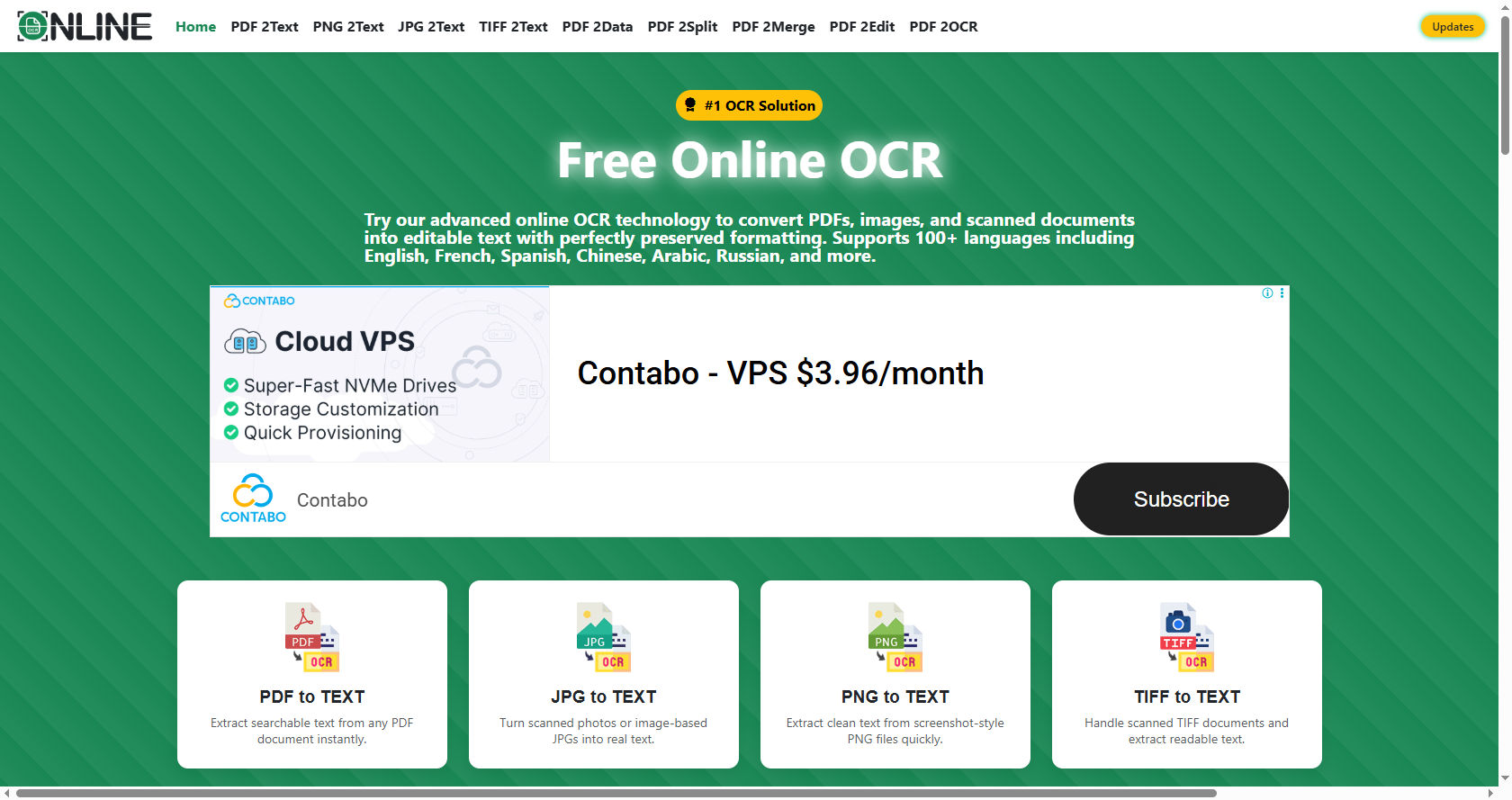
Optical Character Recognition (OCR) technology has improved dramatically over the years, making it easier than ever to extract text from images accurately. However, one common question remains: Can an OCR image converter preserve formatting?
When users convert documents, they often need more than just plain text. They want to maintain the original appearance of the document, including fonts, headings, tables, columns, spacing, images, and overall layout.
This is especially important for reports, invoices, academic papers, contracts, and business documents.Modern online OCR solutions have become increasingly capable of preserving document formatting, but the results depend on several factors, including image quality, document complexity, OCR technology, and output format.
This comprehensive guide explores how OCR image converters preserve formatting, what challenges they face, which document elements are easiest or hardest to maintain, and how users can achieve the best results when using online OCR tools.
Understanding OCR Technology
OCR stands for Optical Character Recognition. It is a technology that identifies text within images and converts it into machine-readable and editable content.
When you upload a scanned document to an online OCR platform, the software performs several steps:
-
Detects the image structure
-
Identifies text regions
-
Recognizes individual characters
-
Reconstructs words and sentences
-
Attempts to recreate the original layout
-
Generates an editable output file
Earlier OCR systems focused mainly on text extraction. Modern online OCR platforms use artificial intelligence and machine learning to understand document structure and preserve formatting more effectively.
What Does Formatting Mean in OCR?
Formatting refers to the visual structure and design elements of a document.
Common formatting elements include:
-
Headings
-
Font styles
-
Font sizes
-
Bold text
-
Italic text
-
Underlined text
-
Paragraph spacing
-
Bullet lists
-
Numbered lists
-
Tables
-
Columns
-
Images
-
Charts
-
Page breaks
-
Margins
-
Alignment
A high-quality online OCR system attempts to preserve as many of these elements as possible during conversion.
Can OCR Image Converters Preserve Formatting?
The simple answer is yes—but not perfectly in every situation.
Modern online OCR technology can preserve much of a document's formatting, especially when the source image is clear and well-structured. However, accuracy varies depending on document complexity.
For simple documents, formatting preservation can be excellent. For highly complex layouts, some manual adjustments may still be necessary after conversion.
The effectiveness of online OCR formatting preservation depends on:
-
Image quality
-
Resolution
-
Lighting conditions
-
Text clarity
-
Document structure
-
OCR engine capabilities
-
Output format selection
How OCR Detects Document Layout
Before preserving formatting, OCR software must understand the layout of the page.
Layout analysis is one of the most important stages in online OCR processing.
The system identifies:
Text Blocks
OCR software separates paragraphs and sections.
For example, a title is identified separately from body text.
Headings
Advanced OCR engines recognize larger or bold text and classify it as headings.
Columns
Many newspapers and magazines use multiple columns.
Modern online OCR systems can detect and preserve column layouts.
Tables
The software identifies rows and columns and attempts to recreate them accurately.
Images and Graphics
OCR distinguishes text from non-text elements such as logos, pictures, and charts.
Formatting Elements OCR Preserves Well
Certain formatting elements are easier for OCR systems to preserve.
Basic Paragraph Structure
Most modern online OCR tools accurately preserve paragraph breaks.
Text remains organized rather than appearing as one continuous block.
Headings and Titles
Large headings are generally recognized successfully.
The OCR engine often retains:
-
Font size differences
-
Bold styling
-
Positioning
Lists
Bulleted and numbered lists are usually preserved effectively.
This helps maintain readability after conversion.
Text Alignment
Many online OCR systems preserve:
-
Left alignment
-
Center alignment
-
Right alignment
This is particularly useful in reports and presentations.
Simple Tables
Basic tables with clearly defined borders are often recreated accurately.
The software can identify:
-
Rows
-
Columns
-
Cell boundaries
Formatting Elements That Can Be Challenging
Despite advancements, some formatting features remain difficult.
Complex Tables
Tables containing merged cells, nested structures, or unusual layouts can confuse OCR engines.
Even advanced online OCR solutions may require manual correction afterward.
Multiple Columns
Complex magazine layouts with overlapping images and text can be difficult to reproduce perfectly.
Decorative Fonts
Stylized fonts may be recognized incorrectly.
The OCR system may replace them with standard fonts.
Handwritten Notes
Handwriting recognition has improved significantly but remains less reliable than printed text recognition.
Mathematical Equations
Equations often contain symbols, fractions, and special characters that can challenge OCR systems.
Charts and Diagrams
OCR software typically recognizes labels but may not recreate charts accurately.
The Role of Artificial Intelligence in Formatting Preservation
Artificial intelligence has transformed OCR performance.
Traditional OCR relied mainly on pattern matching.
Modern online OCR platforms use AI to understand document structure more intelligently.
AI helps OCR systems:
-
Recognize document hierarchy
-
Distinguish headings from paragraphs
-
Identify tables
-
Preserve spacing
-
Reconstruct layouts
-
Improve accuracy
Machine learning models continue improving as they process more documents.
OCR Output Formats and Formatting Preservation
The output format significantly affects formatting retention.
Microsoft Word Documents
Word files are among the best options for preserving formatting.
Many online OCR tools generate editable DOCX files while maintaining:
-
Fonts
-
Headings
-
Tables
-
Lists
-
Alignment
Searchable PDFs
Searchable PDFs maintain the original visual appearance while adding searchable text layers.
This is one of the most popular outputs from online OCR systems.
Excel Files
Tables extracted from images can be exported to spreadsheets.
This is useful for financial reports and invoices.
Plain Text Files
Plain text files preserve only text content.
Formatting is usually lost.
Rich Text Format
RTF files preserve many formatting elements while remaining compatible with multiple applications.
Factors That Affect Formatting Accuracy
Several factors influence how well OCR preserves formatting.
Image Resolution
Higher resolution images produce better results.
A minimum of 300 DPI is often recommended.
Scan Quality
Clean scans allow online OCR software to identify layout elements more accurately.
Contrast
Strong contrast between text and background improves recognition.
Straight Alignment
Skewed documents can reduce formatting accuracy.
Noise Reduction
Removing specks, shadows, and distortions improves OCR performance.
Font Consistency
Documents with standard fonts are easier to process.
Preserving Tables with OCR
Tables are among the most requested formatting features.
Businesses frequently use online OCR for:
-
Financial statements
-
Spreadsheets
-
Invoices
-
Reports
Modern OCR systems analyze:
-
Horizontal lines
-
Vertical lines
-
Cell boundaries
-
Data placement
Simple tables are usually preserved well.
Complex tables may require editing after conversion.
Preserving Fonts and Styles
Font preservation remains one of OCR's biggest challenges.
OCR software primarily focuses on content recognition rather than exact font replication.
However, many advanced online OCR tools preserve:
-
Bold text
-
Italic text
-
Underlining
-
Relative font sizes
Exact font matching is not always guaranteed.
Preserving Images Within Documents
Many documents contain images alongside text.
Some OCR converters:
-
Retain image placement
-
Preserve image size
-
Maintain page layout
However, image quality may vary depending on the export format.
Modern online OCR platforms are increasingly capable of preserving both text and visual elements.
OCR for Business Documents
Businesses frequently require formatting preservation.
Examples include:
Contracts
Maintaining sections and clauses improves readability.
Invoices
Preserving tables and financial data is essential.
Reports
Formatting helps communicate information clearly.
Presentations
Structured layouts improve professional appearance.
Many organizations rely on online OCR to digitize archives while preserving document integrity.
OCR for Students and Researchers
Students often scan:
-
Textbooks
-
Research papers
-
Lecture notes
Formatting preservation helps maintain:
-
Citations
-
Headings
-
Footnotes
-
References
Modern online OCR tools make academic document conversion more efficient.
OCR for Historical Documents
Historical records present unique challenges.
Issues include:
-
Faded ink
-
Damaged pages
-
Unusual fonts
-
Aging paper
Advanced online OCR solutions use AI-powered restoration techniques to improve recognition while preserving document structure.
However, manual review is often necessary.
Common Formatting Problems After OCR
Users may encounter certain issues after conversion.
Missing Spaces
Words may appear joined together.
Broken Paragraphs
Paragraph spacing may not transfer perfectly.
Misaligned Tables
Table cells can shift during conversion.
Font Substitution
Original fonts may be replaced.
Incorrect Page Breaks
Long documents may require adjustments.
These problems are usually easier to fix than manually typing the entire document.
Tips for Better Formatting Preservation
Users can improve OCR results by following best practices.
Use High-Quality Scans
Higher quality images provide better recognition.
Avoid Shadows
Ensure even lighting when photographing documents.
Scan at Proper Resolution
Use at least 300 DPI whenever possible.
Straighten Documents
Keep pages aligned before scanning.
Clean the Image
Remove stains, marks, and unnecessary background elements.
Choose Advanced OCR Software
Not all OCR tools offer the same formatting capabilities.
Modern AI-powered online OCR platforms typically perform better.
Comparing Basic OCR and Advanced OCR
Basic OCR
Basic OCR focuses on extracting text.
Features:
-
Text recognition
-
Minimal formatting retention
-
Lower accuracy for complex layouts
Advanced OCR
Advanced online OCR solutions offer:
-
Layout detection
-
Table recognition
-
Font preservation
-
AI-based analysis
-
Searchable PDFs
-
Multi-column support
The difference in formatting quality can be substantial.
The Future of OCR Formatting Preservation
OCR technology continues evolving rapidly.
Future developments may include:
Improved AI Models
Smarter AI systems will better understand document structures.
Better Table Reconstruction
Complex tables will become easier to preserve.
Enhanced Font Recognition
OCR may eventually identify exact fonts more consistently.
Real-Time Processing
Faster processing speeds will improve user experience.
Greater Accuracy
Future online OCR platforms will likely achieve near-human levels of formatting preservation for many document types.
When Manual Editing Is Still Necessary
Even the best OCR systems are not perfect.
Manual review may be needed for:
-
Legal documents
-
Technical reports
-
Scientific papers
-
Historical archives
-
Complex magazines
Fortunately, OCR reduces workload dramatically by automating most of the conversion process.
Instead of retyping entire documents, users only need to make minor corrections.
Choosing the Right OCR Tool
When selecting an OCR image converter, consider:
-
Recognition accuracy
-
Formatting preservation
-
Table support
-
Output formats
-
Language support
-
Processing speed
-
Security features
-
AI capabilities
A reliable online OCR platform should balance text accuracy with layout preservation.
Benefits of Formatting Preservation
Preserving formatting provides several advantages.
Saves Time
Users spend less time correcting layouts.
Improves Productivity
Documents become immediately usable.
Enhances Professional Appearance
Maintained formatting preserves document quality.
Reduces Errors
Fewer manual adjustments lower the risk of mistakes.
Supports Digital Transformation
Organizations can digitize records more efficiently using online OCR solutions.
Conclusion
So, can an OCR image converter preserve formatting? The answer is yes, to a significant extent. Modern OCR technology has advanced far beyond simple text extraction and can now maintain many important formatting elements, including headings, paragraphs, lists, tables, alignment, and document structure.
The effectiveness of formatting preservation depends largely on image quality, document complexity, OCR engine sophistication, and output format selection. Simple business documents, reports, and academic papers often convert with impressive accuracy, while highly complex layouts, decorative fonts, and intricate tables may still require some manual editing.
Artificial intelligence has greatly enhanced the capabilities of online OCR, allowing systems to analyze document layouts more intelligently and recreate them with increasing precision. As OCR technology continues to evolve, formatting preservation will become even more accurate and reliable.
For users seeking efficient document digitization, modern online OCR solutions offer a practical and time-saving way to convert images into editable documents while retaining much of the original appearance. Although perfection is not always guaranteed, today's OCR tools can preserve formatting well enough to significantly reduce manual work and improve productivity across educational, professional, and business environments.